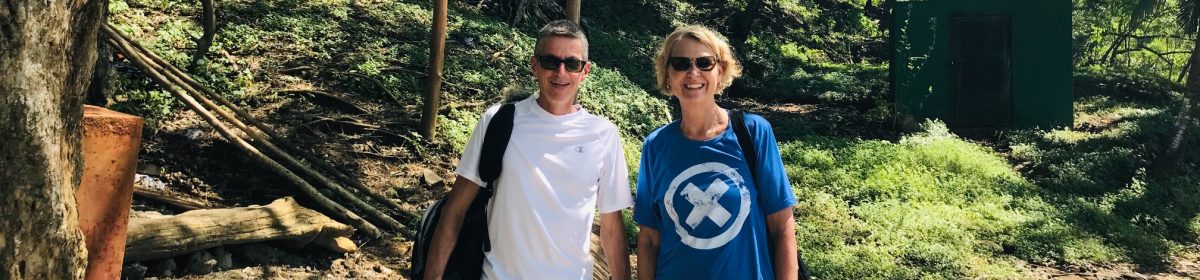
When we first moved to Costa Rica, we had an apartment for a year in Escazú, a suburb of the capital city, San José. Our apartment complex contained its own shopping and restaurants and was also located so close to other stores and restaurants, that we didn’t even need a car. Wanting to be nearer to what attracted us to Costa Rica in the first place, but still waiting for our house to be completed, we moved to a rental house on the Pacific side of Costa Rica for a year and a half. There we had grocery stores and restaurants within short driving distances, so it became necessary to purchase a vehicle. Every 2 or 3 weeks we drove to Liberia, about an hour away, to get to a Walmart and PriceSmart (like Costco).
Our house was finally finished in January 2022, and it is … a little more remote. We are now two hours away from Liberia, and, on a good day, at least a half hour to the nearest sizeable town of Nosara/Guiones, depending on the weather and road conditions
We knew it would be different living in a more remote location, but admittedly, it has taken some getting used to. Now “going into town” requires more time and more thought. No more running to the store to quickly pick up something that we may have forgotten in a previous trip. It’s at least an hour’s drive round trip, even without considering the actual time it takes at whatever stops you make there. And time is the least of it – what you encounter along the way makes going to town an adventure unto itself.
First, who are you sharing the road with, besides the obvious – other cars and trucks?
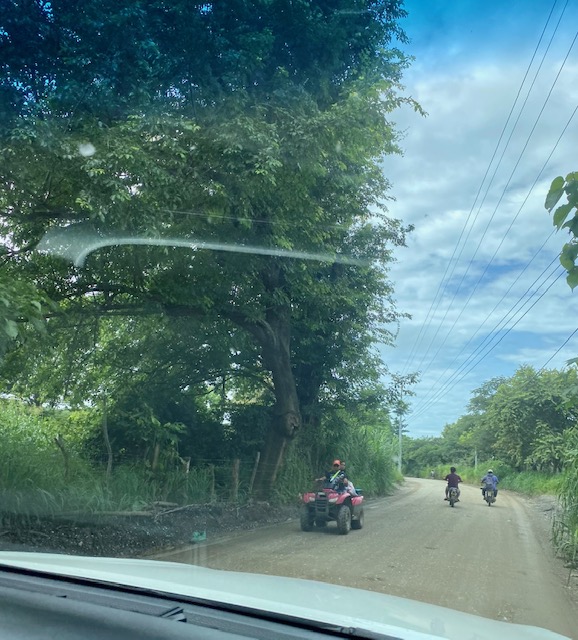
Motorcycles. More people here have motorcycles, or “motos” than cars, probably because it is a cheaper alternative. Motos with one or two adults on them go fast and will pass you on any side they please. Some wear helmets, but most don’t, and almost of all of them are wearing flip-flops! In less-than-ideal road conditions (more on that later) they are making their way around potholes, but not always the same way a car or truck will. If you are driving and veering left or right to avoid a pothole you may be steering right into a moto passing you from behind.
And the things you see them carry – like surf boards, or propane tanks, and once even a kitchen sink!
Motos are also a mode of family transportation. You will often see an adult with one or two children, or two adults with two children, all on the same moto. The usual positioning from front to back is – child, adult, child, adult. The other day we saw two women with two children, one child in front, and one baby with its arms and legs outstretched, casually being carried in one arm by the woman on the back of the moto. Seeing multiple small children on motos used to shock me. Now I am used to it. It’s how people can afford to get around.
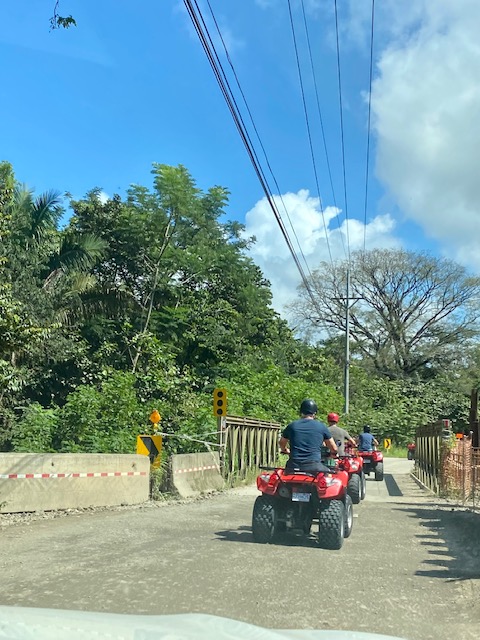
ATVs. ATVs are used by some people for general transportation. They usually won’t pass you like the motos, and only have one or two people on them. They are seldom a problem, unless they are tourists. The worst is when you get behind a line of tourists on an ATV excursion! You can’t pass them and they go slow.
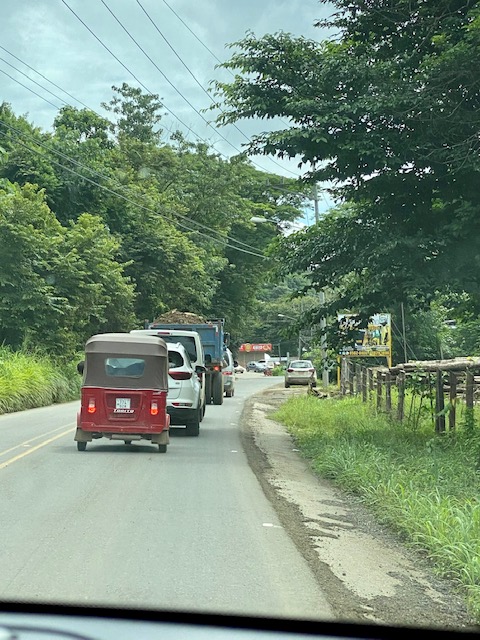
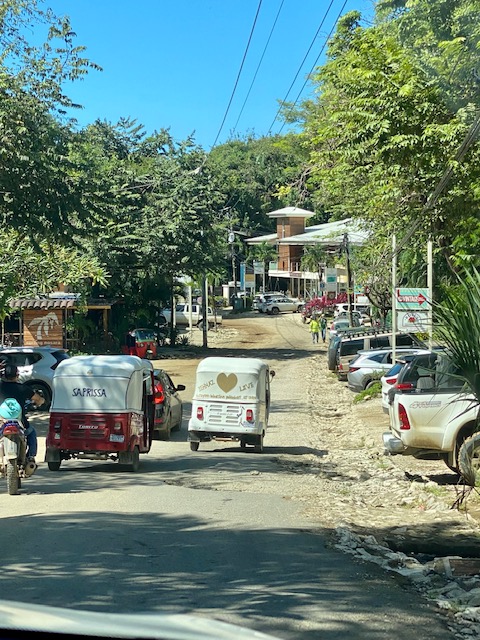
Tuk-tuks. You might be more familiar with tuk-tuk usage in Asian countries. Tuk-tuks are a three-wheeled motor vehicle used as a taxi. They usually don’t venture as far up into the hills where we live, due to the road conditions, but they are all over in the town, either driving passengers around, or are parked in inconvenient places waiting for them. Most tuk-tuks are red, but some of their owners have distinguished theirs with such decals such as skulls, Batman stickers, or wording on the back announcing that they are a “Warrior for God”, etc.
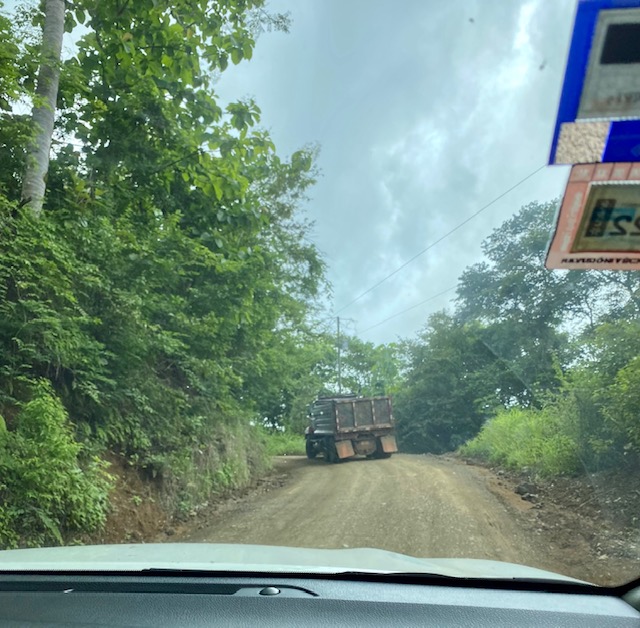
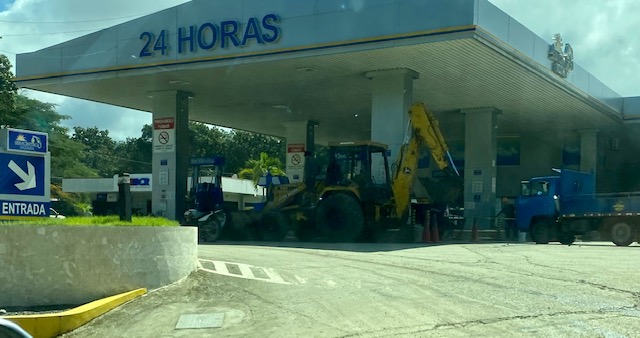
Big trucks/Construction Equipment. There are a lot of big trucks as well as construction equipment going on the roads, like front loaders, etc. We recently spotted equipment at the local gas station! They go slow up hills, and if you are lucky, you can pass them. If not, you just have to follow along.
Animals. Dogs own the roads. They may be trotting along, but often they just lay down in the middle of the road and are not interested in moving for you. I don’t know how they are still alive! But you do see the same ones in the same places, so people are driving around, rather than over them. More often than not they are strays, always multiplying.
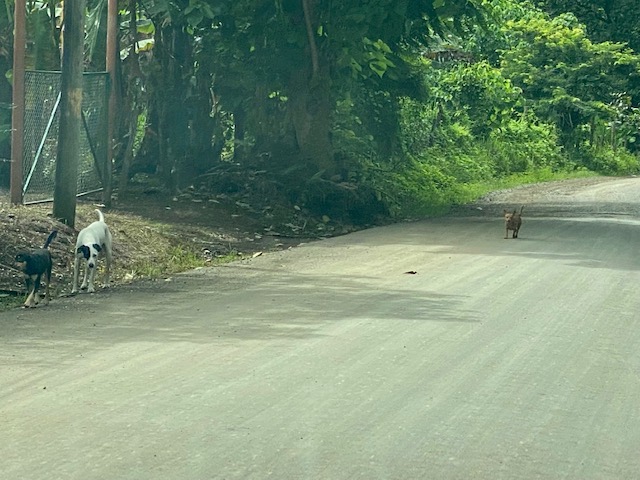
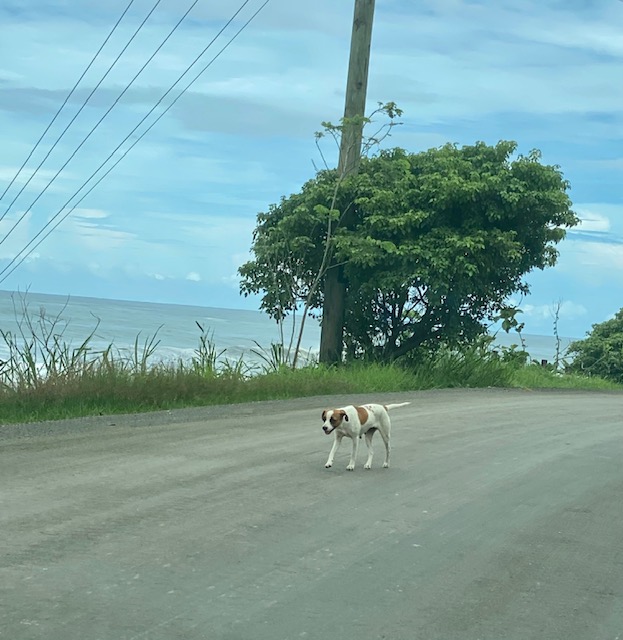
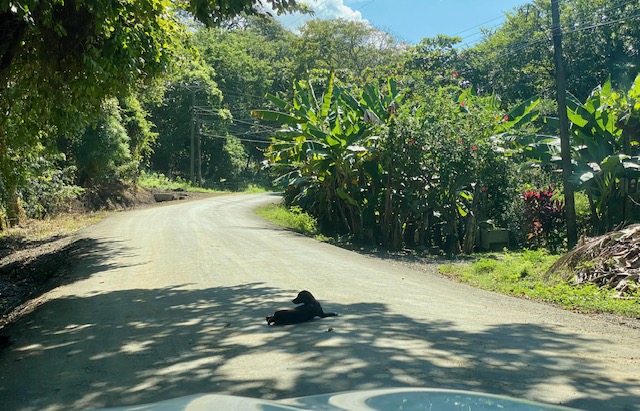
But dogs aren’t the only animals you need to avoid. There are chickens, goats, horses and cows. Chickens are free range, and you see them crossing the road, and of course, wonder, why? Large animals somehow get out of their fences to take a stroll along, or in, the road. Or, sometimes, you run into a cow herd that is being driven by a cowboy (on a horse) down the road.

Bicycles. There aren’t as many bicyclists here, probably because the road conditions are challenging and the crazy drivers. There are two kinds of cyclists – the ones that are cycling for transportation, and the ones that are cycling for sport. You can easily tell the difference based on what they are wearing and pedaling– everyday clothes, no helmets, and no-speed bikes, or all decked out in their spandex, helmets and expensive sunglasses and multi-gear bicycles.
Pedestrians. In town there are no sidewalks and people just walk where they need to, which is usually right in front of you as you are trying to drive through. Along the more remote sections of the area, you will at times encounter hitchhikers. During the tourist season as we drove into town, we occasionally saw young people walking alone, hitchhiking. They were always headed in the direction of town, but were far from it. Near our community there aren’t a lot of places they could be coming from, so we guess that they are walking from PachaMama, billed as an Eco Village and Retreat Center, that is located somewhat near to where we live.
We have never been there, but we’ve heard stories. From their website, PachaMama bills itself as a powerful gateway to profound, transformative growth, and is a platform for deep voyage into healing, self-acceptance, and expansion of consciousness. They also say that it is a safe space for fellow travelers to shed old layers, transcend limitations, and discover wholeness. They have six pillars for holding this alternative way of life – meditation, emotional healing, physical rejuvenation, native ceremonies, ecological living and mystical musical journeys. This all sounds like code for licking toads and using other psychedelic drugs. Are the young hitchhikers we see on a mystical journey, or … escaping? We’ve never stopped to find out.
There are a few local hitchhikers too – sometimes close to town we’ll see women with kids, and sometimes older guys. You might be surprised to learn that once we picked up one ancient-looking guy who was not that far down the road from our community. He was a small and kind of sickly-looking guy, and most importantly, not carrying a machete! (We thought that we could take him, if things went south.) As it turns out, he was just a smelly old man who was not at all interested in engaging with us, despite our limited attempts in Spanish, and asked to be let out sooner than where he told us he was originally going.
That’s what we encounter on the roads, but what about the roads themselves? Spoiler alert – Costa Rica is not known for having good roads.
There is a public road from our housing community to the main highway, that consists mostly of red dirt and something they refer to here as “lastre” which is a mixture of small rocks and dirt. The rainy season started earlier than normal this year and has been historical in the amount of rain received. This has taken a heavy toll on the roads. The public road to the main highway was becoming very difficult to traverse, even before the rainiest months of August, September and October.
To provide a safe road, the community we live in chipped in for road repairs on the public road to smooth out the gullies and potholes that had been carved out by the rain. It was apparent that the local government had no intention of dealing with this stretch of public road. Interestingly, it also didn’t seem to care in the least that someone else was willing to do road maintenance on its behalf. The road improvement that our community procured and paid for was done several months ago, and for a while the drive was much better. But, as the heavier rains have fallen in September and October and continued into November, there are areas where the water has created muddy ruts. Unfortunately, one spot is so bad that a worker lost her muffler on the way to work recently, and a collection is once again being taken to at least fix that part of the road – this time by a different vendor.
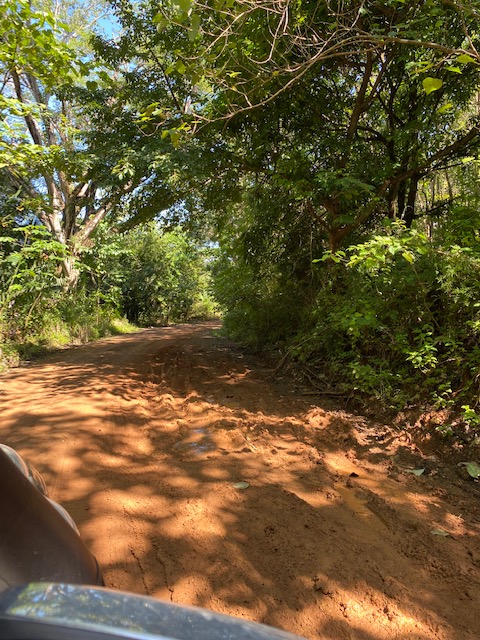
Once you get past the dirt public road, you come to Highway 160. If you go north on 160 you meet up with one of the country’s larger major highways, Highway 21, which we take to Liberia. Highway 21 is 2-lane all the way and paved. Highway 160, on the other hand, has areas where some of it is “black top”, some of it is gravel and some is just dirt/lastre. Going to Liberia we must travel on the unpaved section of 160 for about an hour. We drove this a few weeks ago, and it is not for the faint of heart. There are large ruts, potholes, and bridges lacking proper railings, with deep potholes leading up to them.
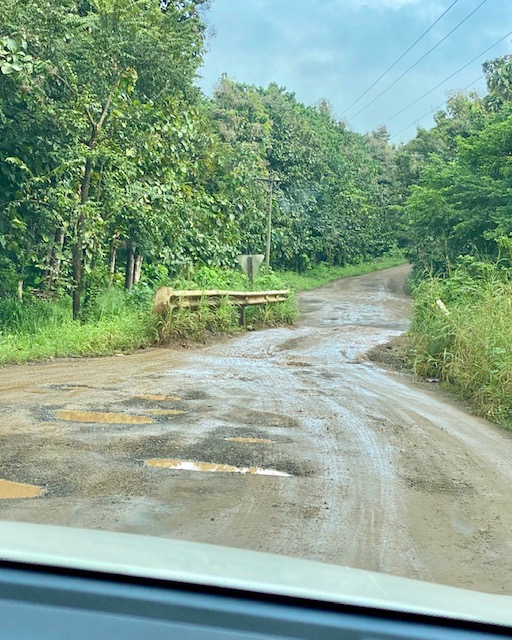

Driving on the worst sections of the road involves figuring out your way through the potholes. As there are no lane markers, you just weave your way through, using the tire tracks on the road left by other vehicles to help guide your way. It is worse when it is raining, as the potholes fill up and you have no idea how deep they really are. When you are heading to Liberia, the last 5 miles on 160 before you hit continuous pavement are the worst. We are hopeful that road repair work will occur during the dry season!
Because of the toll it takes on our truck and our sanity, we have been limiting our drives to Liberia, going to Nosara to meet our basic needs – gas and groceries. When we first moved into our house in January, the section of 160 to Nosara had very limited blacktopped areas. In the early summer months of this year the government did do some roadwork. But their decision to do, or not to do, what, and where, was befuddling. In some sections they applied blacktop, in other sections they smoothed out the road and applied gravel, and some sections they left entirely alone.
Although we were grateful for any blacktop they put in place, it was aggravating when they were doing that road construction, because they did an entire section of the road at the same time. This meant that both “lanes” (if you can all them that), were closed down at the same time, stopping traffic in both directions. You had no idea where they were doing road work, or when. So, we would be driving along to Nosara, and then along the way get stopped for road construction. If they were doing blacktop, they would have the entire road closed, not just one lane. You had to sit in a line of vehicles until they had applied the tar to the road and allowed sufficient time for it to dry. (Of course, the motos would always pass all of the stopped vehicles and make their way to the front of the line.) The workers who stopped the traffic would never be able to tell you how long it would take. Your choices were to sit and wait, or go back. We were caught in the waiting line on a few occasions. Once we decided it wasn’t worth the wait and went back home, and another time we sat for 45 minutes.
You may be thinking, well, why don’t you just take another road? Not really a thing here. From where we are, going the “other” way would be a circuitous route of 1 ½ hours! And who knows if it would be any better!
As you drive to Nosara on 160 from our house, you start on gravel, then hit a stretch of blacktop, then back to gravel, then hit an area where nothing has been done, then back to blacktop, etc. You must always be on the lookout for potholes and gullies in the roads. Some obvious places to find them are at the top of hills, at the bottom of hills, down the sides of hills where the water flows and carves them out, flat levels where the water sits, underneath trees that have branches covering the roads, … so, pretty much, everywhere! A few potholes have even opened on the roads newly blacktopped this summer.
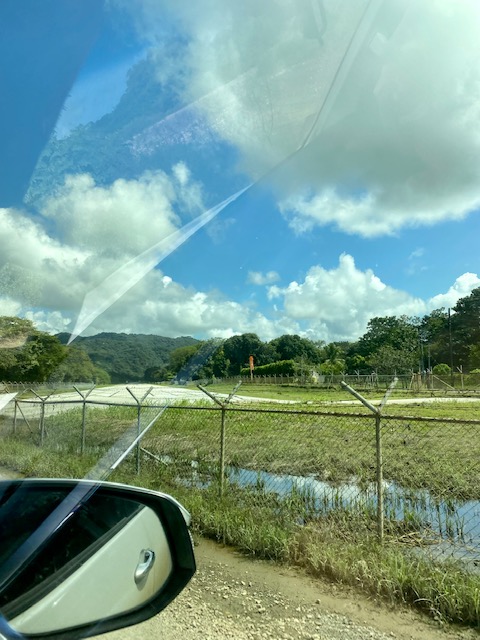
The town of Nosara/Guiones is no better – there are large potholes everywhere! The best stretch of pavement that I have seen around here is the landing strip at the small Nosara airport.

But the most intriguing parts of the drive are river crossings. There are bridges on all but one of the crossings, and all bridges are one lane only. There is a protocol here – drivers on one side are supposed to yield to the other. A posted “Ceda” sign tells you to yield to drivers on the other side. Except when the sign isn’t there. Then it’s whomever gets there first.
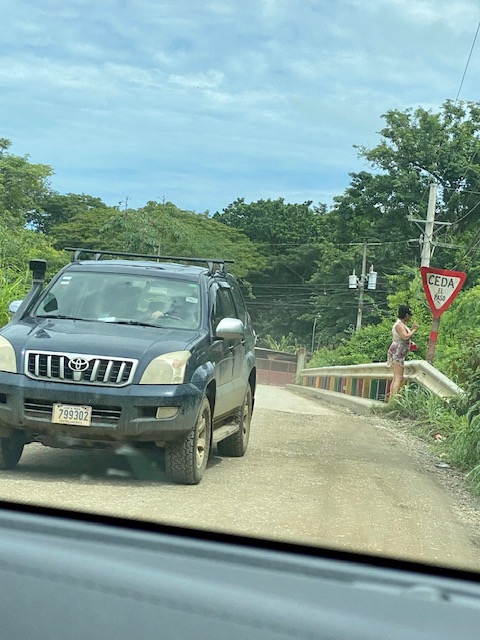
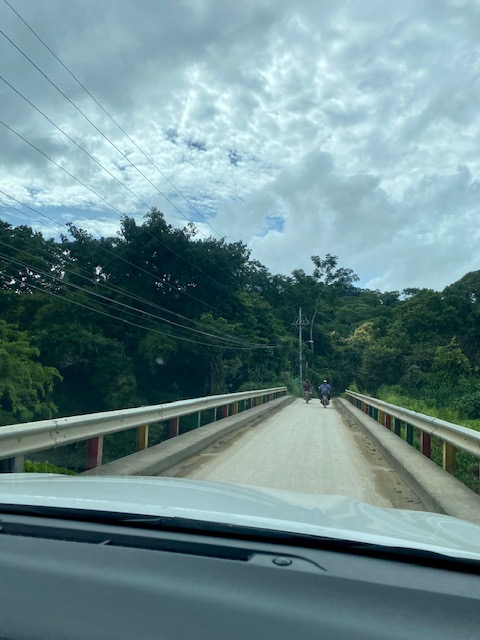
There are a couple of nice bridges that we cross as we go into town. By nice I mean that they have railings on both sides and look like they will hold up as you drive over them. Still, we are cautious if we are following a large truck. We’ll wait until they have crossed before we start. No need to push a non-posted weight limit!
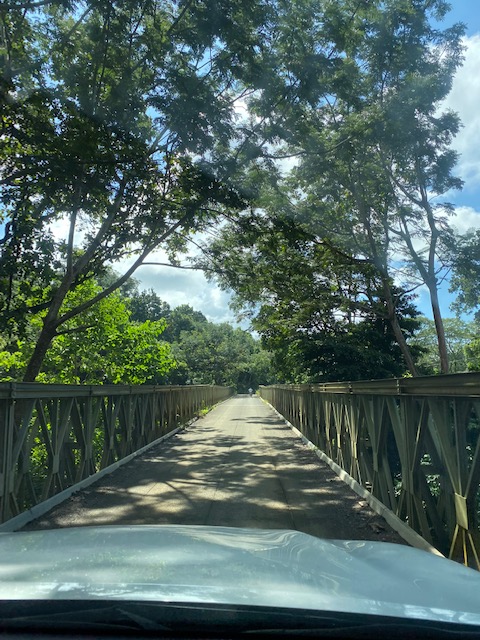
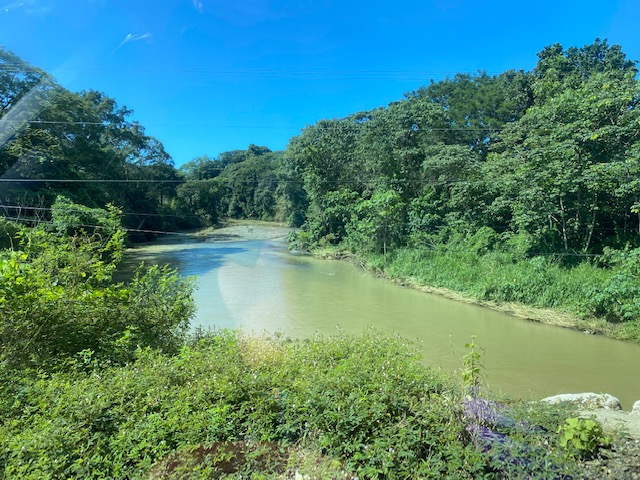
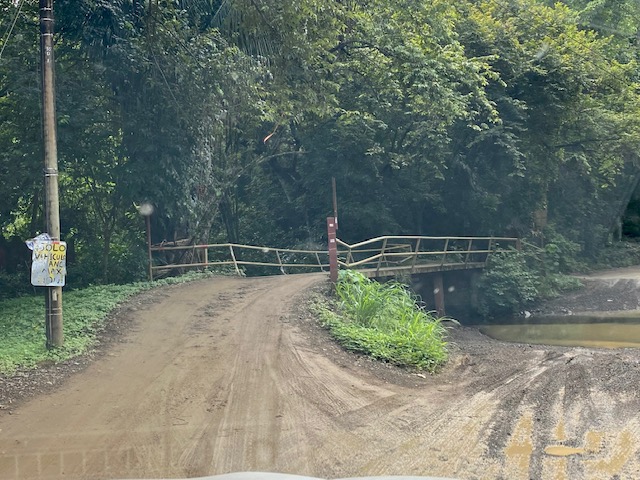
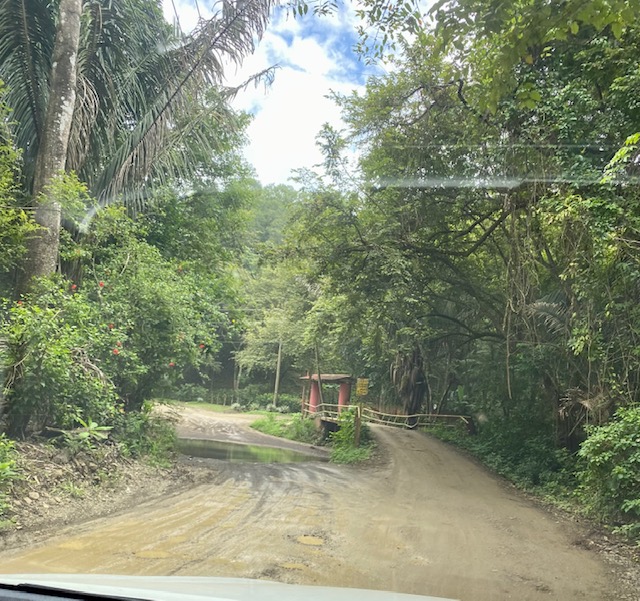
Then there are a couple of other bridges that we have to cross that require special attention. One of them has no railing at all on one side. You can see that there was a properly placed railing at one time, but it somehow got wrecked and is now down below the bridge. There used to be a Costa Rican warning on the bridge – a stick stuck along the side of it with a piece of cloth tied to it – but that’s missing now too.
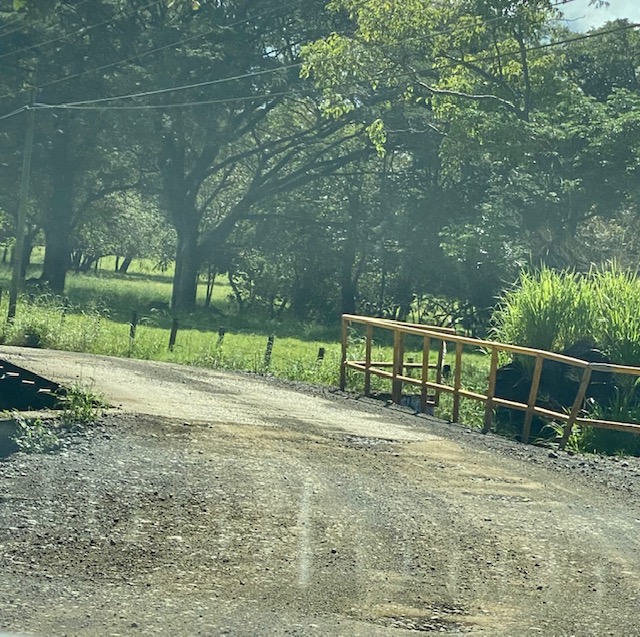
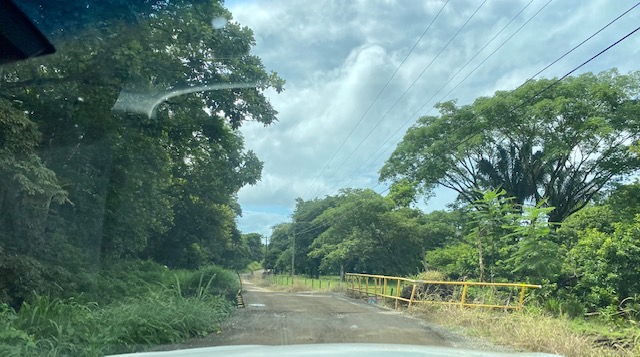
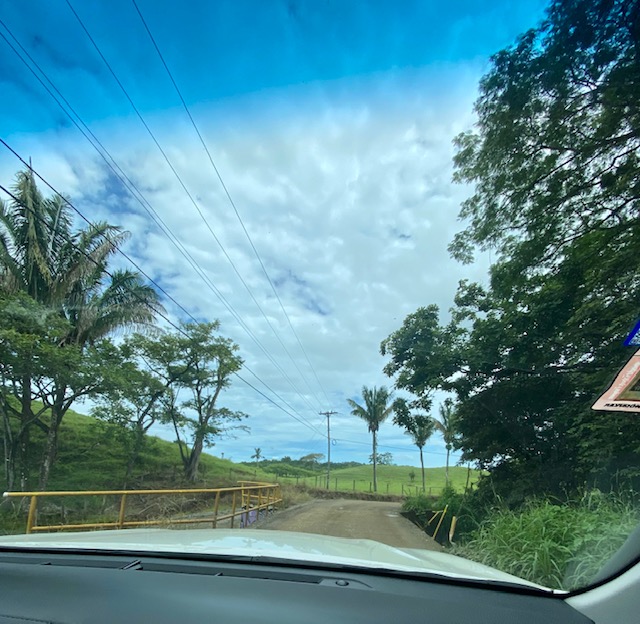
The worst bridge we cross going into Nosara looks so rickety that you can’t believe it will hold up at all. There is a hand-written sign on one side telling you that only one vehicle should be on the bridge at a time. (Like you could even get more than one vehicle on it!) Traversing it is tricky. There are rails on both sides, kind of, but on one side in particular it is all bent out of shape. If you drive on it wrong, your tire will be off the bridge. It used to be even thornier, in that there was an electric pole that you directly encountered when you came off the bridge. That miraculously got moved – one day we came to the bridge and realized it was just gone.
It is possible to go across the river itself instead of using that rickety bridge, which some people prefer to do when the river is low and dry. With the rains the entrance and exit to the river there is muddy. You may clear the water, but get stuck in the mud. So it is good to have the rickety bridge option. John has become quite adept at navigating it.

Then there is the Ostional River crossing. It is necessary to cross the Ostional River for us to get to Nosara. The only bridge over that river is also very wobbly and by design, only wide enough to accommodate pedestrians and motos.
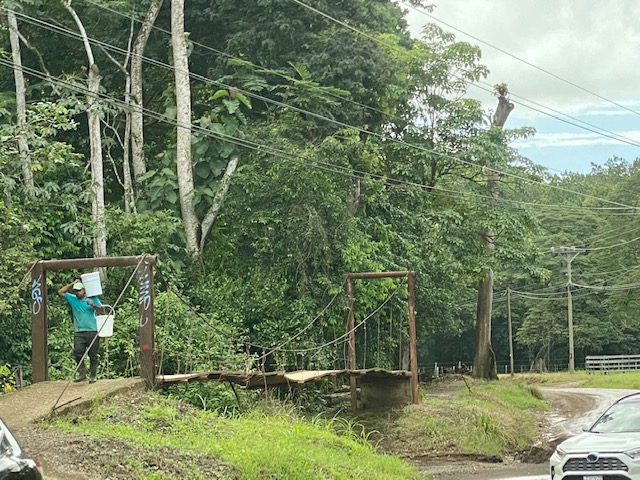
If you are driving a car or truck, you have to go into the river to cross it.
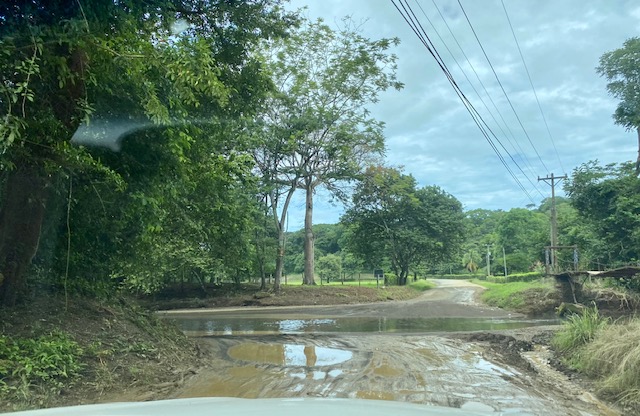
If it’s the dry season, crossing the Ostional River is a piece of cake, especially now that we know how to do it. You never go straight across. You drive in a wide arc from one bank to the next. We learned this from friends and by watching how the locals drove through the river.
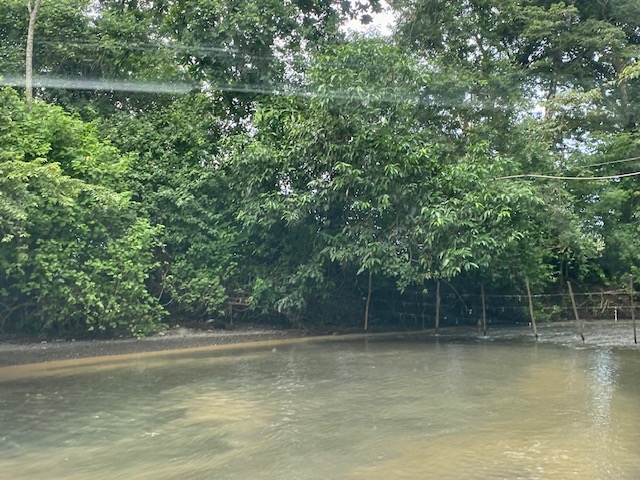

But what about the rainy season? We had been told that we should be prepared not to be able to get into town if there were heavy rains because we wouldn’t be able to cross the river. Or, if we were in town, and heavy rain started, best to high tail it back before the river rose too much to cross.
It takes us at least 15 minutes or so from our house to get to the river, so it would be good to know what the conditions were before we started. Believe it or not, there is a WhatsApp chat group whose only purpose is to provide information on whether or not you can cross the Ostional River! (WhatsApp is a voice and text messaging service from Meta. It is used here by almost everyone for calling and messaging. I’ve seen ads for it on US TV, too.)
The WhatsApp chat group is called “Puede cruzar el rio Osti” meaning, “Can you cross the Osti river.” Every single day, multiple times a day, someone asks in either English, Spanish, or sometimes both, variations of “How is the river now?” or “Can someone update the river situation?” or, of course, “Can you cross the river?”
And someone always answers!
Depending on the situation, there may be little information given, like simply “Bajo”, which means “low” or “Fácil” which means easy. Or sometimes the person answering provides more information, like “Just crossed in a small AWD no problema” or “The river went down. Still strong stream but crossable for big cars and brave drivers.”
We try very hard not to be put in a situation where we feel uncomfortable crossing the Ostional River. We monitor the chat group and watch the weather before making a decision to go into town. Yet, a few weeks ago, we found ourselves facing the river and unsure of what we should do.
We’d had some torrential rains for a few days and not been able to cross the river. Although we always have enough food in the house that we aren’t going to starve, we were getting to the point where we really needed some things, so decided to go into town. The weather was fair and in the chat group, people were crossing the river. All good. We headed into town and crossed the Ostional River. It was higher than usual, but we made it across.
On the way back, as we drove to the river crossing, but still not within view of it, we saw several oncoming vehicles. We viewed that as a good sign – they must have crossed the river. But as the river came into view, we saw that there were two vehicles parked at the bank of the river. Uh oh – not a good sign. What locals do when they don’t want to cross the river is to just sit and wait it out. The thing about the river is that it is fed from the mountains upstream and you don’t know what the weather conditions are there. Maybe they had rain and it is causing the river to rise and the current to be strong. Also, the river empties into the ocean nearby and it is possible that with high tide the river might be rising as well.
We pulled in behind the two parked vehicles and cursed. Was the river really that bad? Hadn’t we just seen oncoming vehicles? We saw another vehicle pull up to the opposite bank. We were hoping that they would cross and show that it was possible. Nope. That vehicle just stopped, and its two occupants got out and walked closer to the river for a better view. To be fair, one of them first walked towards a field and stood near a tree, most likely relieving himself, which is a common thing here, for guys. Anyway, they were stopped and weren’t going.
John got out and walked to the riverbank to check it out. He couldn’t tell how deep it was and came back to the truck. (A permanent measuring stick or pole of some kind would be a big help here. We’d asked ourselves why there wasn’t one, and this has been a topic on the WhatsApp group, as well.)
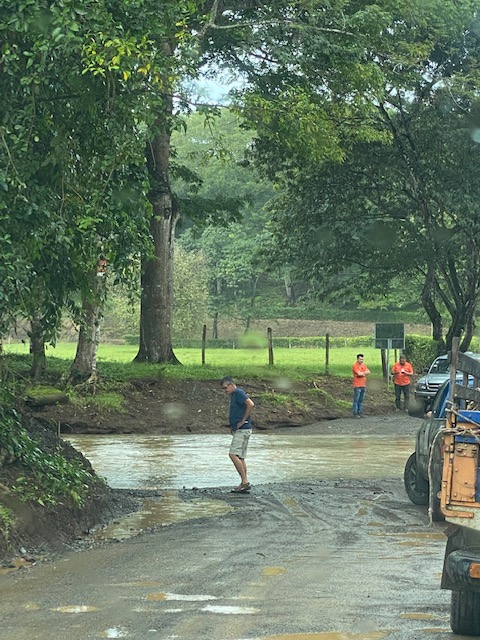
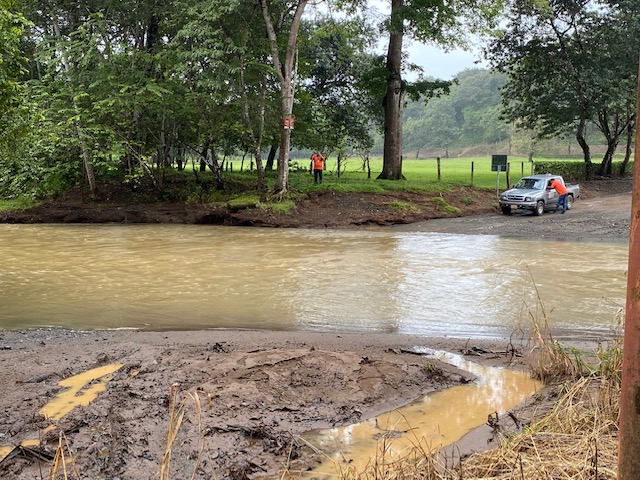
We fretted some more. I got out and walked to the moto/pedestrian bridge to get a better view. As I was doing that, a woman in an SUV passed our three parked vehicles , plowed into the river, and made her way across. She didn’t even hesitate! The river was deeper than when we usually cross, but she made it.
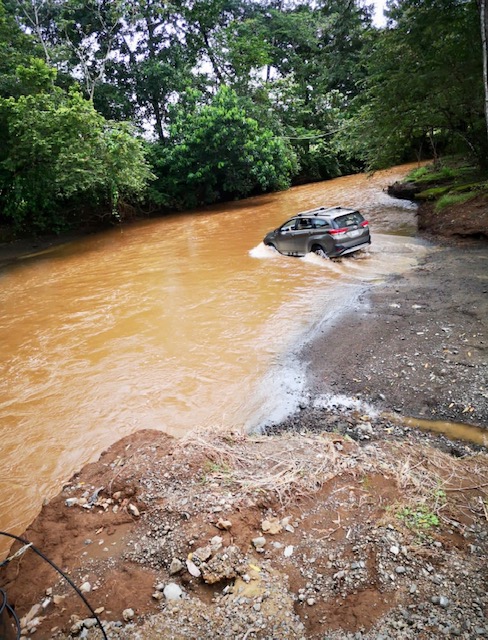
As I was walking down from the bridge an older Tico guy on a moto crossed and spotting me, pointed to our truck, seemingly asking if it was our vehicle. I nodded. He just said, “no problema, no problema” and drove off.
Now that we’d seen someone cross, and with the assurance from a complete stranger that it wouldn’t be a problem, we attempted the river crossing. Although we made it “no problema” John did say that his heart was pounding after we made it to the other side.
Even though we had a successful outcome, we are well aware that there are consequences of crossing when you shouldn’t. Just a day or so later, with more heavy rains, we saw on the WhatsApp chat that a vehicle tried to cross the river between 4 and 5 a.m. when it was still dark, and hadn’t made it across. There were pictures of the vehicle, and videos of towing the vehicle out. There were a lot of comments about how this was probably a tourist who left their common sense at home, as well as comments about the bravery of the people who helped out. It’s hard to believe that someone would drive directly into a river, but they did!
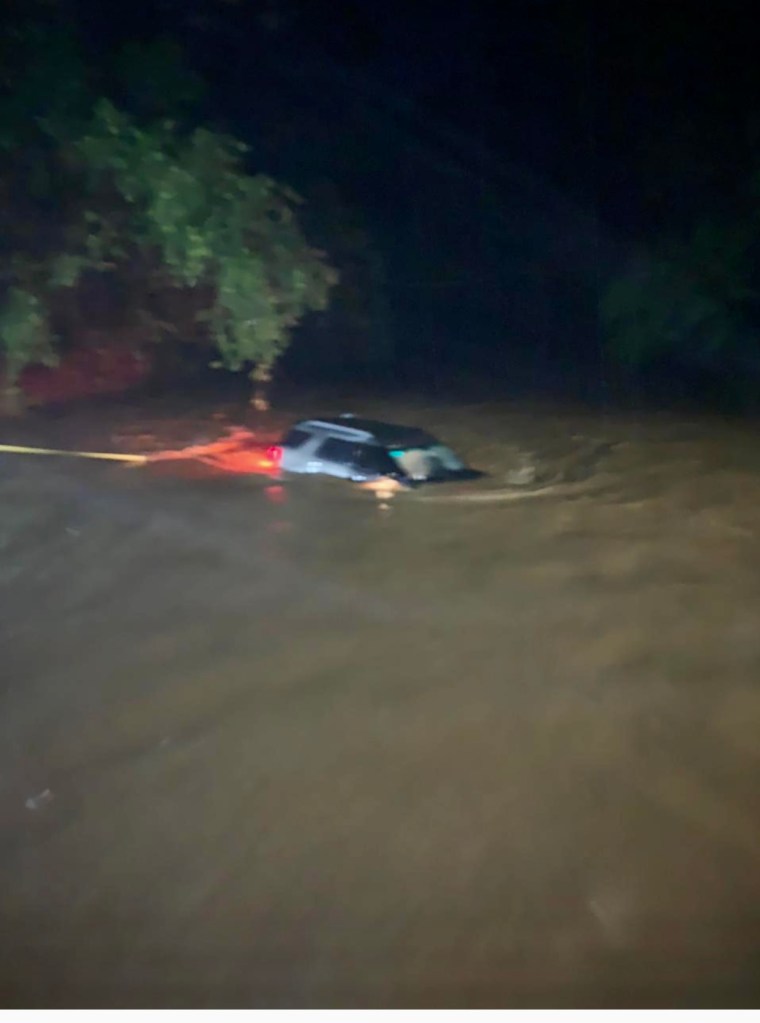
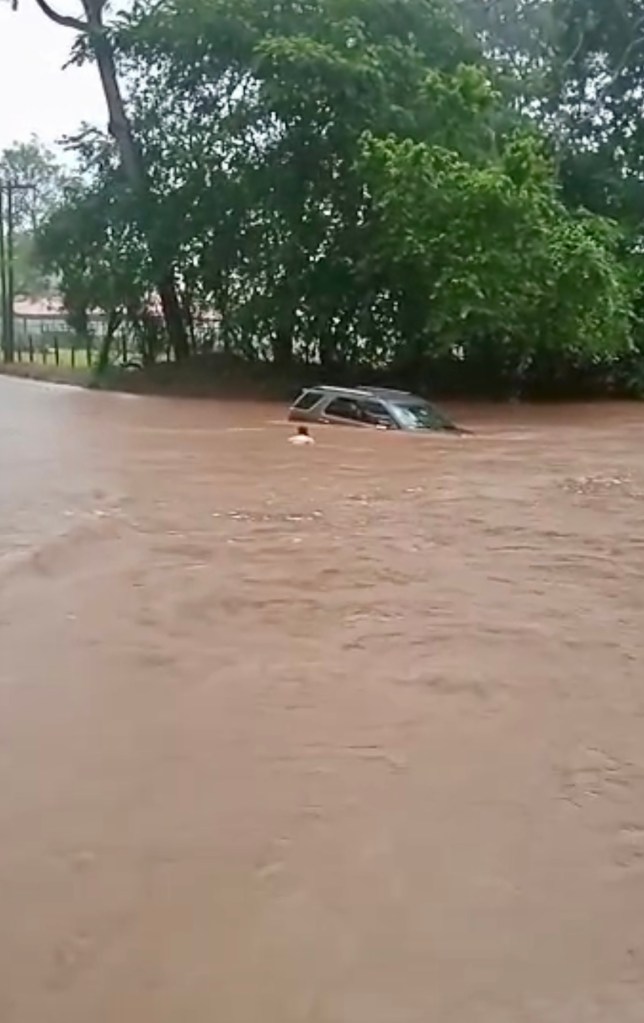
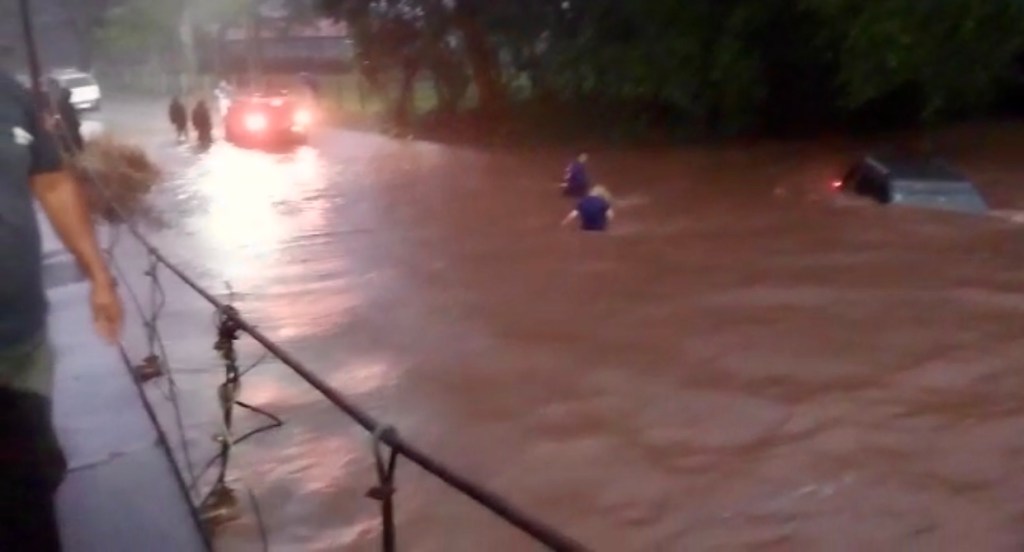
You’d think they would build a bridge for cars and trucks over the Ostional River. We’ve heard that it has been discussed and approved at least 5 times before, with nothing happening. The WhatsApp group shared information just today that a group of officials from the MOPT (Costa Rica’s Transport and Public Works Ministry) and other government officials are traveling to Ostional and Nosara this Sunday, to talk about the condition of Highway 160 and the bridges (or lack thereof). The WhatsApp administrator was encouraging people to meet them at the river to make the needs clear. (Although as one WhatsApp message poster said, “you’d have to be pretty dumb not to know and see the problems here.”) We’ll keep monitoring the chat group to see what happens. It still rains almost every day, and with luck, this group of officials be faced with the same situation as the rest of us – “Can we cross the river?”
The rainy season has continued, longer than it should, and we’re still judicious about our trips to town. We’ll go “if the good Lord is willin’ and the river don’t rise.”
But when it’s a nice day, the views we see along the way help remind us why we are here!
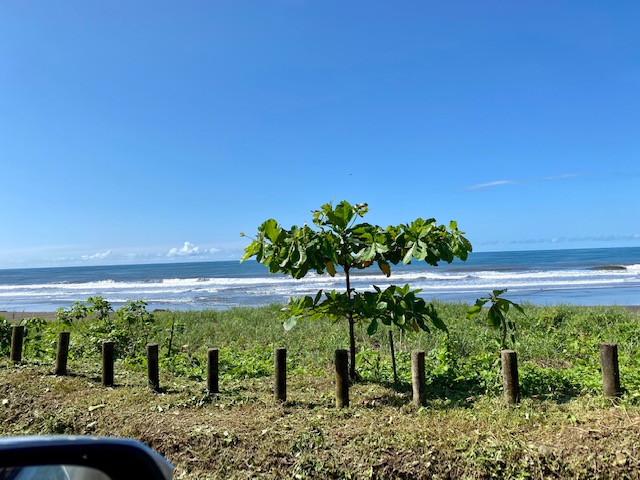

 Remember, it's an adventure.
It truly reminds me of Colombia when i adopted my kids. It is beautiful but treacherous. You two be careful.
By the way, do I still send mail to the Texas address or a different address?
Rhonda
LikeLike