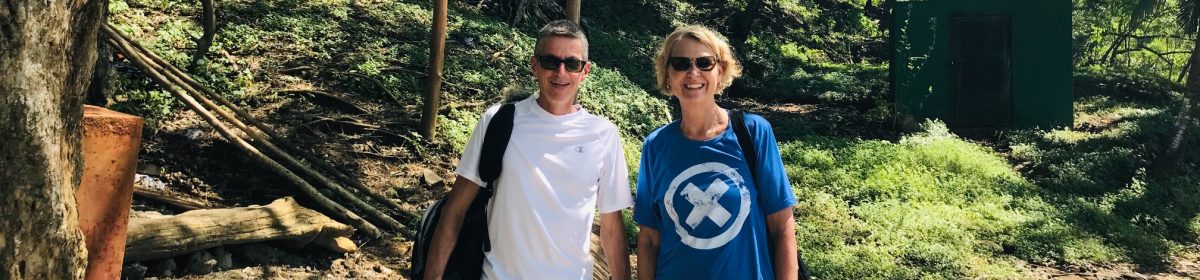
According to the Costa Rican Embassy website, Costa Rica accounts for only 0.03 percent of the earth’s surface, but contains nearly 6 percent of the world’s biodiversity. This is readily apparent based on the number of different bird species that we have encountered here – so different than the ordinary robins, blue jays, etc., we were accustomed to in Iowa. When we lived in Escazú, the suburb of San José, we got used to seeing grackles and parrots. When we moved to our rental house near Playa Flamingo, the number of different bird species that we often saw grew to include kiskadees, magpie-jays, motmots, and scissor-tailed flycatchers, to name just a few. Now that we are in our house, a bit more remotely located, we have experienced even more birds! It was all so interesting and amazing … until the anis swooped in bringing their reign of terror!
I want to take a step back and explain that I have never really been one of those “bird” people. In Iowa I was happy enough to see the first robin of spring and could appreciate a hawk on a country fence post but was never into birds. When our family visited Belize years ago, we were on an excursion to see a 1000-foot waterfall. While we were gazing at its majesty, I just shook my head in disbelief when a group of “birders” who also happened to be there, become all “a twitter” when they noticed a small brown bird that flew into a scrubby bush behind us, and turned their backs on the waterfall!
I could also never understand when a woman got to that certain “mature” age when wearing clothing adorned with birdhouses and/or birds seemed like a good idea. When does that happen? I mean, that sweatshirt with the red cardinal on a snow-covered evergreen tree branch seems to be a staple in all of their wardrobes. This is in addition to the decorative plates and serving trays with those cardinals, hummingbirds, etc., placed in their dining room hutches.
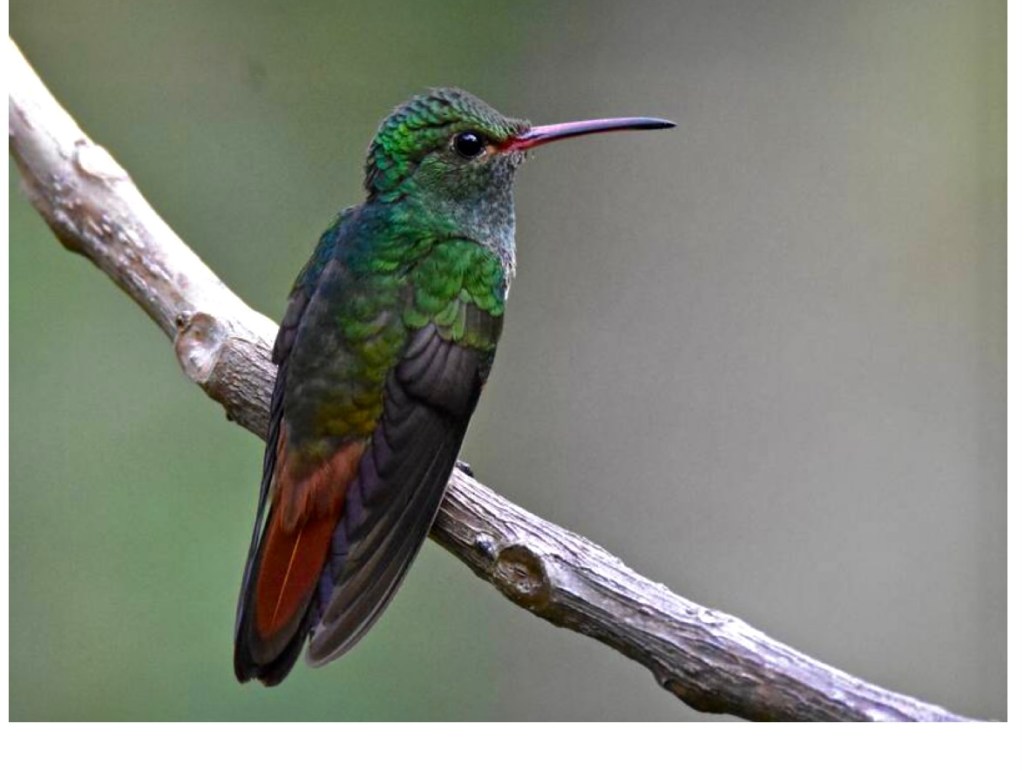
But here in Costa Rica, it is hard not to be captivated by the multitude of different and colorful birds that we experience just right outside our door! There are some that are familiar, but different, like the hummingbirds. Sorry, but the ones in Iowa were just a dull brown. Here in Costa Rica, they are multi-colored, with greens, blues, and purples.
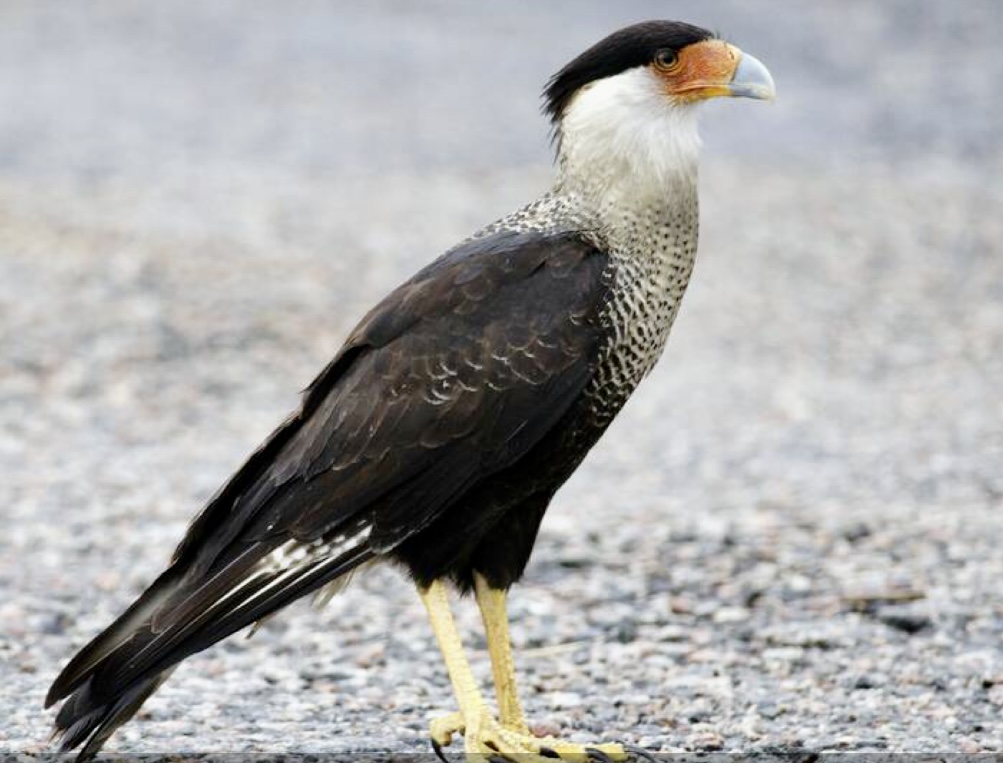
I now can identify birds that I never even knew existed before, and their names roll easily off my tongue. “Oh, there’s a caracara,” I’ll say. Or, “Look, there’s an aracari!” I’m much more excited to see aracaris than caracaras. The caracara is more prevalent. It’s actually a falcon but behaves like a vulture. In fact, you often find them with vultures. (There are a lot of vultures in this country, by the way, providing a valuable service in the “circle of life.”)
The aracari, on the other hand is a type of toucan. Not the “Froot Loops” type of toucan, which is present in this country, and we’ve seen them, but they’re not in the area where we live. However, the aracari is here, and neat to see.

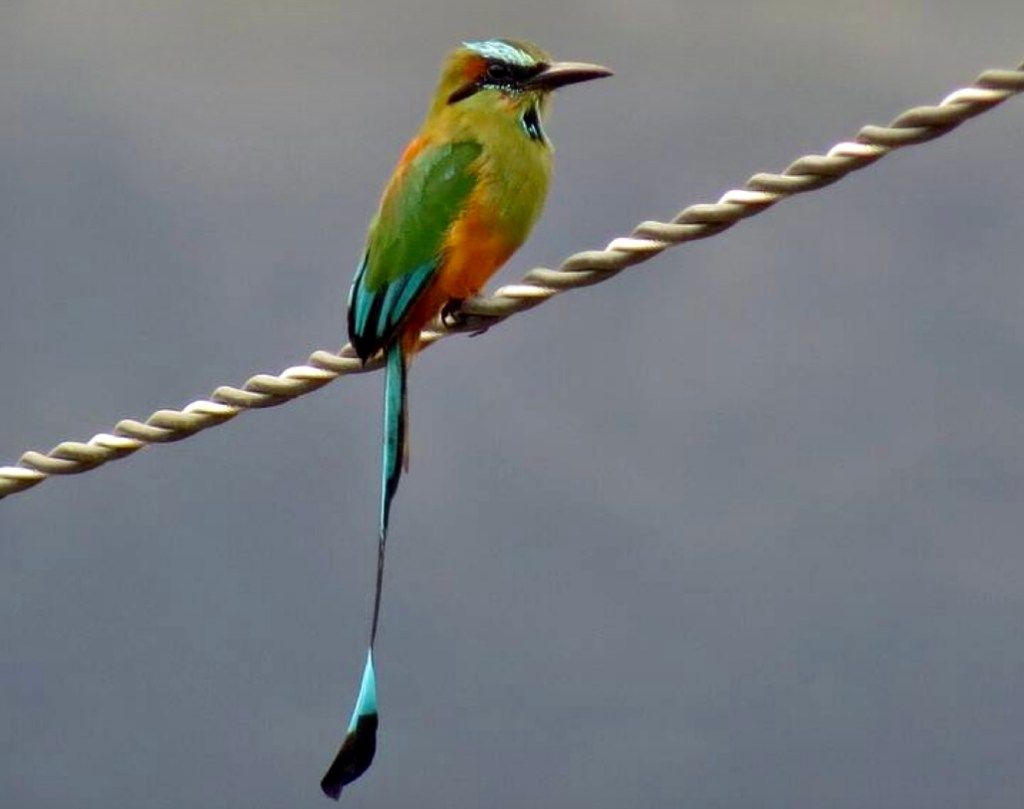
Then there’s the motmot. That’s a cool bird that has a portion of its tail with no feathers. The first time I saw one, I thought there was something wrong with it. Motmots have brilliant colors – turquoise, green, orange, and black. You can spot motmots all over here, often perched on wires.
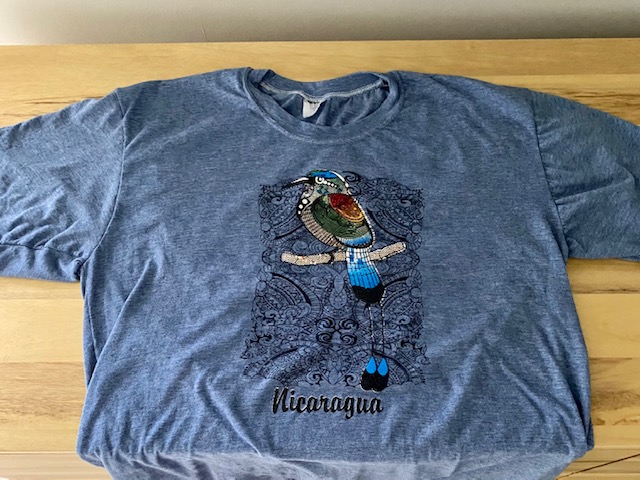
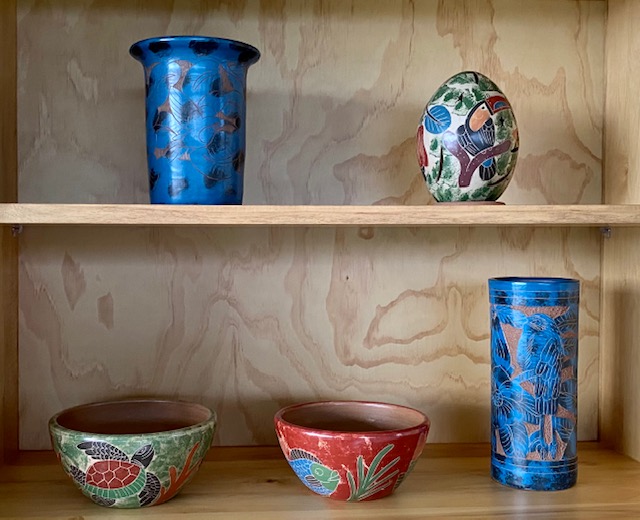
Motmots are the national bird of Nicaragua. On our last trip to Nicaragua this spring, we stopped at the El Mirador – Catarina, a spot with a beautiful view of Lake Nicaragua and beyond. Of course, since it is a popular tourist destination, so there are multiple small shops and vendors. We had been looking for a few items to put on our shelves in our main living area and found some local pottery with pretty colors that we thought would look good in that space. I also wanted to get a t-shirt, just for another option to wear around the house. You can buy them pretty cheap there.
The other day I caught sight of myself in the mirror. Here I was, a “mature” woman, wearing my t-shirt from Nicaragua, that had a motmot bird on it. I glanced over at the pottery on our shelves. They were adorned with birds – motmots, toucans, and hummingbirds. In a rare moment of self-awareness, I realize I’d become one of the “Cardinal” ladies – just a Central American version of one!
Because we have encountered so many different birds so frequently, we needed a means to identify them. We started out with a couple of books – the first was a Costa Rican field guide with all kinds of animals, including birds. That wasn’t sufficient. Then we bought a book specifically about Costa Rican birds. But even then, there were birds that we couldn’t find in the books, and there were times when the books weren’t handy. Eventually John stumbled upon the Merlin Bird ID app for the phone. This app is from the Cornell Lab of Ornithology, Cornell University. The website for the app credits bird watchers all over the world, but also mentions current and past students who have put in many years curating data.
When you come across a bird you don’t recognize, the app leads you through a series of easy-to-answer questions, like your location, how big it is compared to birds that most people recognize, the bird’s colors, and where you see it, like on the ground, in a tree, etc. The app then produces a list of possible birds with pictures. It also gives you a paragraph description of the bird, and tells you whether its common, rare, etc. You can even identify birds through their calls. We have found this to be a very useful, and sometimes, an even amusing, app.
Amusing? Yes. We have a tree near the back patio of our house that is either dead, partially dead, or doesn’t have leaves most of the year. (We haven’t been in the house a full year yet, so are waiting to see. I’m betting on dead.) All kinds of birds come to perch in that tree, and it is often where we see species new to us. One day I looked out the back kitchen window and saw a bird I didn’t recognize. Looking through the binoculars, we went through the process on the Merlin app and identified it as the Masked Tityra. Here is the description of this bird from the app:

What caught my eye was the first word, “Handsome”, and the last sentence – “Distinctive call is a wet quacking or farting sound.”
I imagined a group of students sitting in a cramped room on the Cornell campus late on a Friday afternoon.
Student A – “OK team, we’ve got one more to bird to get through before we can get out of here for the weekend. What is it?”
Student B – “Masked Tityra.” Picture is displayed on the wall screen.
Student A – “Seems easy to provide a visual description. Who’s on that?”
Student C – “I think it’s kind of a handsome bird, I’ll take the description.”
Student D – “Handsome?”
Student C, defensively – “Yes, kind of handsome.”
Student D – “OK, if you say so. Go for it.”
Student A – “Play the audio so we can get a description on that, too.”
Student B plays the audio. All the students look at each other.
Student D – “OMG, how are we going to describe that?”
Student B, looking at C – “Think that’s handsome, too?”
Student C – “Nooo.”
Student A, helpfully – “Maybe a kind of quack?”
Student E – “You know it kind of reminds me of that sound you can make when you put your hand in your armpit and pump it up and down, like this.” Student E goes on to demonstrate.
Student B – “You know, I could never do that. How do you do that?”
Student E continues to demonstrate. Students A, B, and D start arm pumping with varying degrees of success.
Student C – “We need to get serious here. I have a date tonight that I need to get ready for.”
Student D – “Is your date handsome, like this Masked Tityra?”
Student B – “I don’t believe you have a date. You’re just trying to get out of here. We’re Ornithology majors – we don’t get dates.”
Student C, defensively – “I’m not lying. I have a date.”
Student B, challengingly – “Who is it?”
Student C, still defensively – “You wouldn’t know this person.”
Student B, muttering, “Liar.”
Student C, “Let’s get back to the matter at hand. How are we going to describe this?”
Student E – “Like I was demonstrating – let’s call it a wet fart.”
Student A – “As opposed to a dry fart?”
Student D – “Maybe we can use both quack and fart in the description. We’ll put in the word ‘wet’ before quack and that can be construed to modify both quack and fart, but maybe not be so offensive.”
Student C – “I vote yes, just to get us out of here.”
Student D – “Me too. And who is going to see this, anyway? Actual bird people will know what it is when they see it, and it is highly doubtful that anyone else will get close enough to figure it out.”
Student A – “OK, OK, for now. We’ll revisit on Monday.”
But they never do, and thus the description remains.
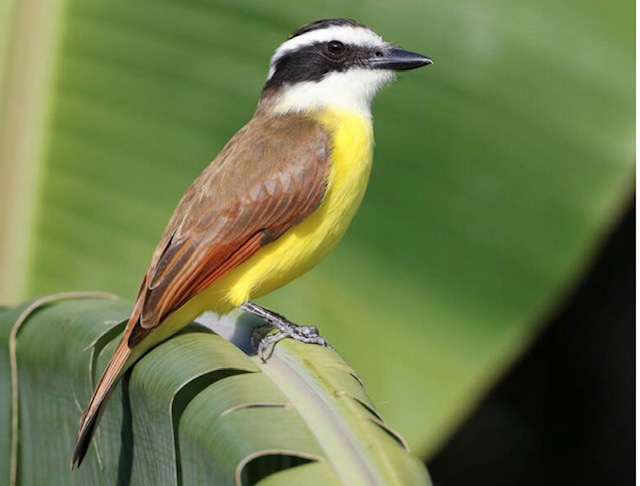
Back to reality. There so many different birds right here, and most of them are in the trees or flying by. A few of the kiskadees like to perch on the rails on our decks, but they’re a colorful bird that eats insects so we don’t mind that they are close.
My relationship with birds was definitely improving, … until the anis.
We have a third guest bedroom that we also use as an office. There we have two desks with our computers (in addition to the bed). My second monitor sits on a desk shelf, just below one of the bedroom’s windows. One day I heard a noise, glanced up and literally jumped, as a black bird head was seemingly coming at me through the window! The window was closed, fortunately, but the bird continued attacking the window!
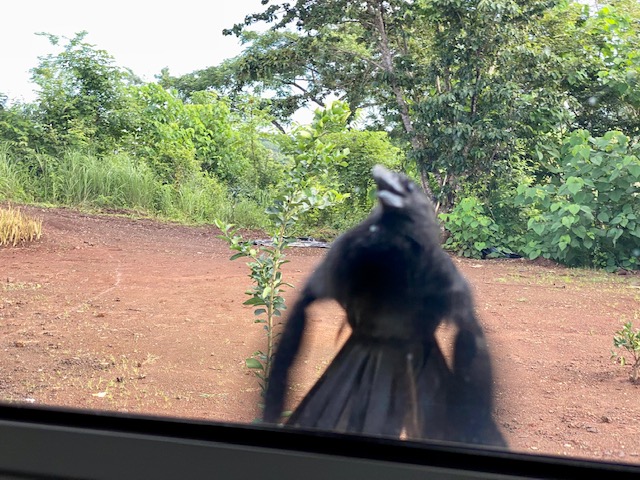
We used the Merlin app to identify it. At first, I thought it might be a kind of grossbeak, because it had a bill like one (similar to a cardinal), and we have other grossbeaks here. (So proud that I know what a grossbeak is!) But this bird was all black – feathers, eyes, beak, legs, feet. This was an ani.
That was the first ani. Then we noticed that the ani was pecking at other windows. We were mistaken – it wasn’t the same one. It was another one. Then more came. They settled in around the different windows, flying at them, and pecking and pecking at them. It didn’t matter if the windows were frosted, e.g., in the bathrooms, or clear, like in the sliding doors and windows in the main living area. They kept flying at the windows and pecking away.
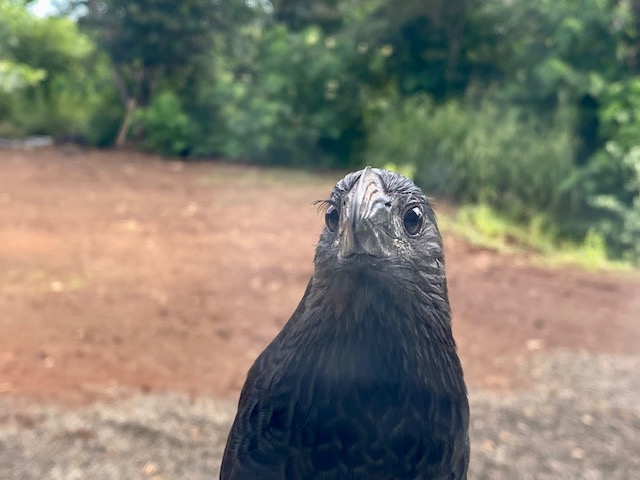
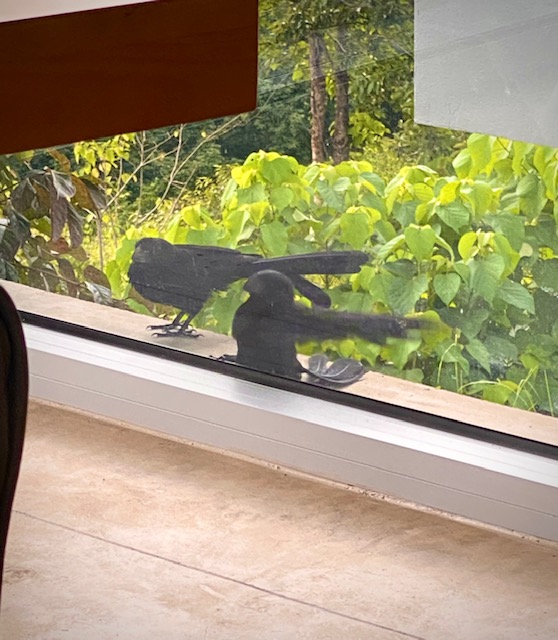
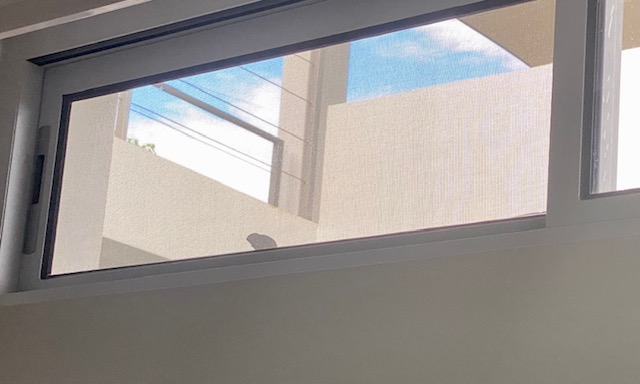
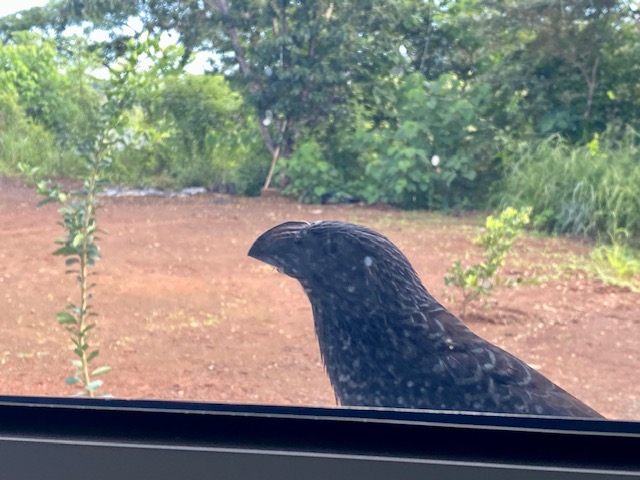

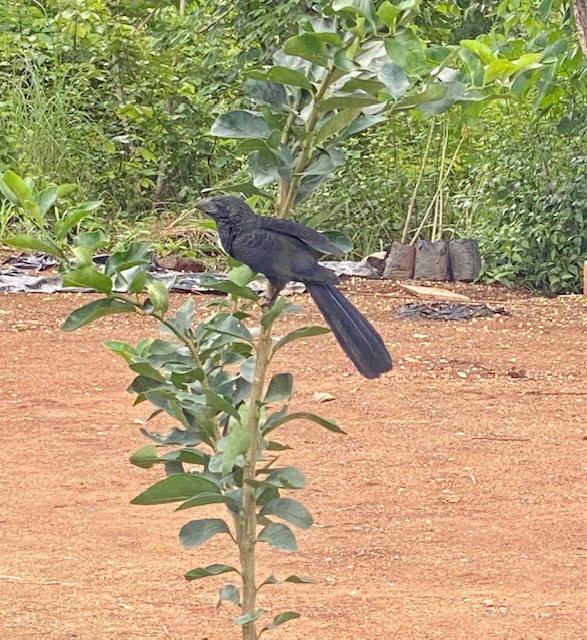
When they pecked at the front door, it sounded like someone was knocking. I had to check to make sure no actual person was there. When they started up, we’d go to the glass and give a shooing motion with our hands and/or feet. It had to be a forceful motion to get them to even notice, and move away. If they did move away, they would only move a few feet, and only for a minute. Then they would be back, pecking and pecking, flying and fluttering at the windows all around the house. As if that wasn’t enough, they started on the windows and mirrors of our truck!
The Merlin app describes an ani as a bizarre bird that awkwardly crashes around.
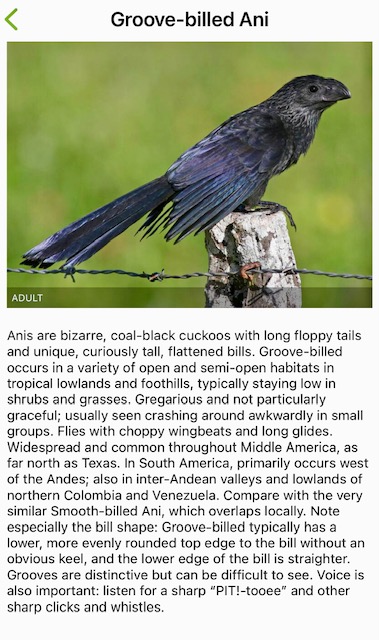
From the description, you might think it is somewhat comical. But, there was no comedy in what these birds were doing. It was startling and somewhat unnerving, to say the least.
And also, annoying. We noticed that where they were, they also pooped. In this country we seem to describe poop a lot, because animals leave deposits around, and you get to know what animal is coming by based on their deposits. Well, just like the birds themselves, the ani’s poop is all black, and on a light house like ours, very noticeable, and very, very hard to remove.
Thankfully, the anis have settled down now – we no longer have them pecking and flying into our glass all around the house. We’ve heard that the behavior exhibited by these birds might be related to the mating season. But, they haven’t left – they are still here. Mostly they like to hang out on our chaise lounges by the pool.
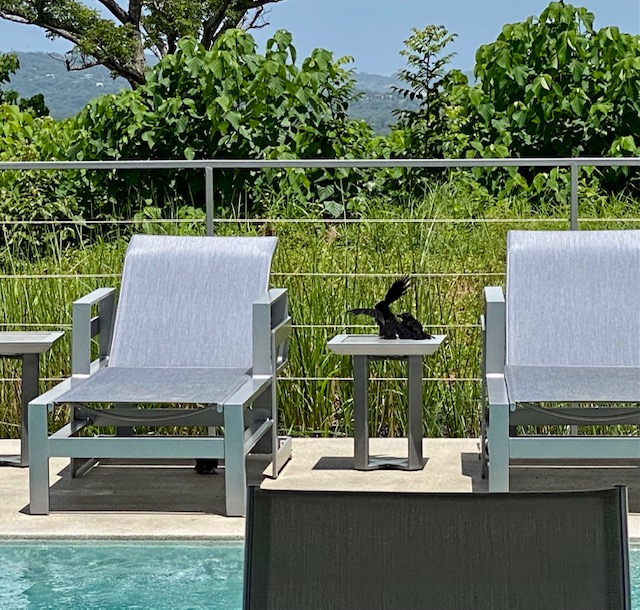
And they are not at all afraid of us. We have to get very close to them before they’ll even bother to fly off.
I guess we’ve come to some sort of understanding. The anis go where they want, when they want, and we fool ourselves into believing that it makes a difference when we shoo them away. Needless to say, the anis have set back my relationship with birds.
I don’t know if Alfred Hitchcock ever encountered anis, but I wouldn’t be surprised if it was the inspiration for his move, “The Birds.”
 Remember, it's an adventure.