Our friends Bill and Randi reached out in early March to ask us if we’d heard about an upcoming Virtual Town Hall to be presented by the U.S. Embassy in Costa Rica on March 16th. They heard about it from a local Facebook group that they belong to. They sent us a copied notice from the Facebook group, that looked like it was copied from a US embassy notice. The notice stated that they (the US Embassy) appreciated any assistance in getting the word out to the US community in Costa Rica, as the Town Hall was open to all US citizens living in Costa Rica. The notice gave the date and time and stated that people interested should reach out to the Embassy directly for the Zoom link information. Of course, we were interested!
We’re US citizens living in Costa Rica and wondered what topics would be covered. Of particular interest to us was information on COVID and vaccine availability in Costa Rica. I was curious, however, why the Embassy hadn’t sent an email to all US citizens registered in their STEP program. STEP (Smart Traveler Enrollment Program) is a free service for US citizens traveling or living abroad. When you are enrolled, you can subscribe to receive email updates with travel advisories and other information for a particular country. Our lawyer’s office in Costa Rica helped us enroll when we went through the initial residency steps.
We receive the STEP email notifications, which have been very helpful during the time of COVID. The US embassy sends regular emails on case numbers, repatriation flights, driving and business restrictions, etc. Additionally, we have received non-COVID related emails about local protests, etc., which may cause traffic delays or disruptions. Seemingly the only thing that the US embassy didn’t think would be helpful to send an email about was their own Zoom Town Hall!
I sent an email requesting to participate in the town hall, per the instructions. There wasn’t a formal request page, we were just supposed to send an email request. I didn’t receive an immediate reply and wondered if they had received it. I finally received the Zoom meeting link the day before the event.
The day of the town hall, I hooked my computer to the TV in our living room and logged into the Zoom. John and I waited for the meeting to begin, watching a (boring) screen with icons of the US and Costa Rican flags.

When the meeting started, a younger woman seated between two (actual) flags against blue drapes, gave a brief introduction. She gave her name, but I didn’t catch it. She was wearing a dark suit jacket – very official, and what I guess I expected.
She said that the Consul General, Mary Fisk-Riddler, would be giving a presentation, and after that, they would respond to questions. Apparently, some people had the foresight to submit questions in advance, but we were also told we could submit questions in the chat area during the Zoom.
I spent a lot of time during my work career giving web trainings, presentations, and conducting meetings. Over time you learn what to do, and maybe more importantly what not to do, on a web meeting. I know I’ve made mistakes, so I can sympathize when I see others making similar ones. For example, the “chimes” were on whenever anyone joined or left this meeting. When you have a meeting that is basically a presentation given to a large number of people, and no one cares who is on the meeting, the last thing you want is to hear when people join or leave the meeting. With a presentation that includes potentially hundreds of people, not everyone is going to join on time, and people will leave at any time. Everyone can hear the chimes, including the presenter. It is very distracting. However, the “chimes” were going on repeatedly during this Zoom, and you could tell that it was distracting to the Consul General, not to mention the rest of us!
We could see the questions start to pop up in the chat area, which proved amusing. One of the first chat questions was, “Can you please turn off the chimes?”
The Zoom meeting cut from the woman who gave the introduction to Mary Fisk-Riddler, Consul General. She was also seated between two flags against blue drapes. Mary was wearing a happy yellow floral dress with a sweater. It was perfectly fine, but not at all what I expected, especially since the first lady had been wearing her very official-looking suit jacket.
Mary started off with some negatives.
- US Embassy is not providing any help on COVID vaccinations.
- During this town hall, they would not be answering any questions related to Costa Rica immigration, like residency. She said people needed to refer to Costa Rican Immigration for that information.
- They would also not be answering any questions on Costa Rica health insurance. She then referred people to their local Ebais office (Ebais is more commonly referred to as “Caja”, the public government health insurance program).
OK, the two most important things for us that we’d hoped would be covered were not going to be, so this was turning out to be a bust from our point of view. We settled in to see if there was anything of value presented.
Mary did go on to tout a few of the US Embassy achievements, as well as what the US Embassy could do.
The first item in the achievements category was how they had aided in providing funding for lifeguards on beaches. It would have been helpful if Mary had told us which beaches had these lifeguards, since this seemed to be so important, but no, we didn’t get that information. We obviously haven’t been to all of the beaches in Costa Rica, but so far, we’ve only seen one beach with lifeguards – Tamarindo.
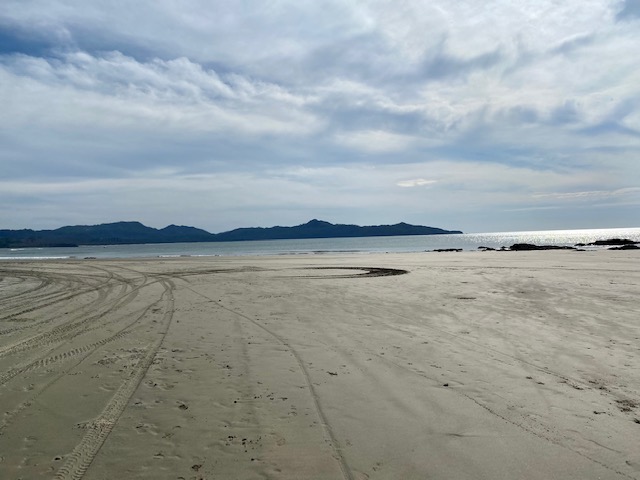
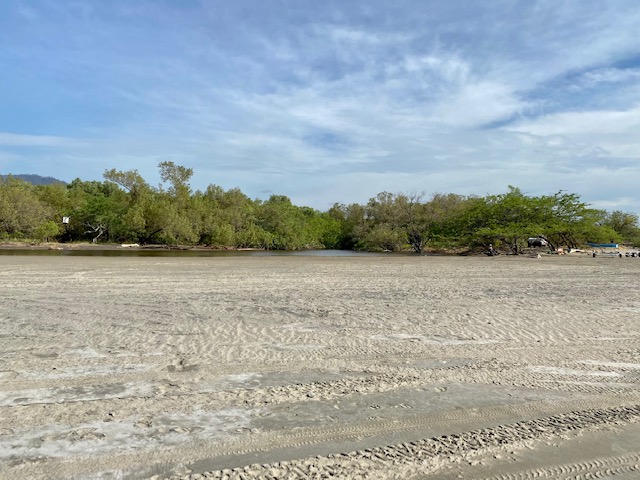
Interestingly, when John and I were walking on a local beach (not Tamarindo) the Monday following Easter, after this Zoom, we saw what we thought was a lifeguard presence there for the very first time. This beach area is a favorite of ours, as it is only a five-minute drive from the community where we live. There are really three connected beaches there and we can get in a solid two-hour walk, round-trip, with some beautiful views.
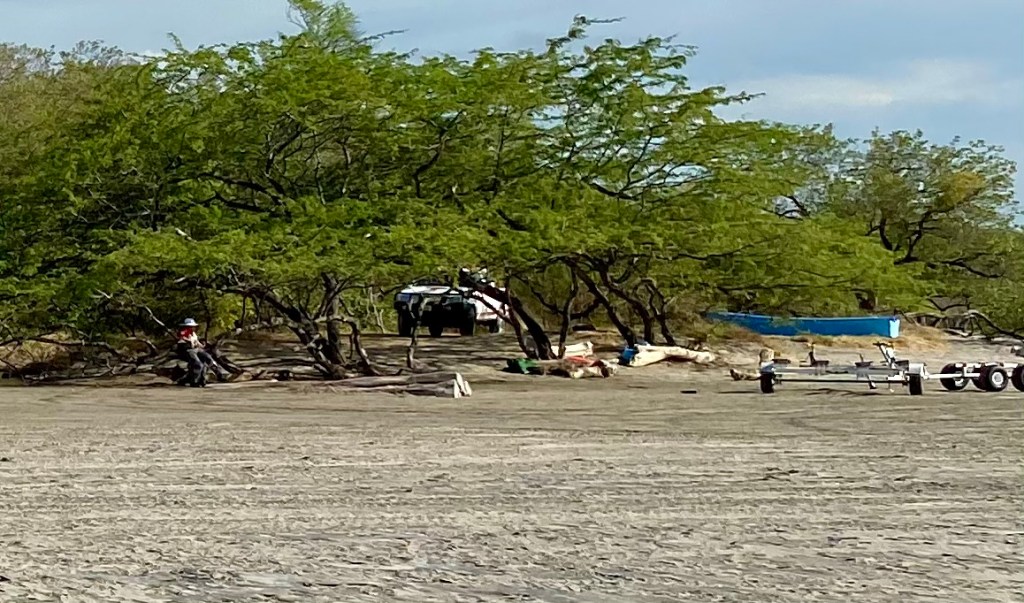
On this day there was an ambulance parked in the shrubs along the beach with a small tent.
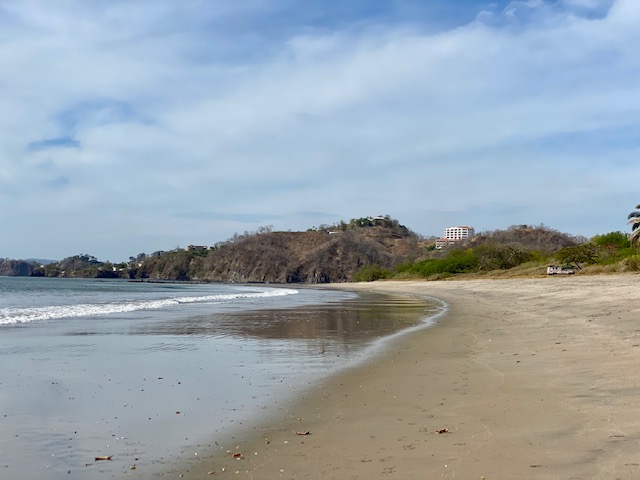
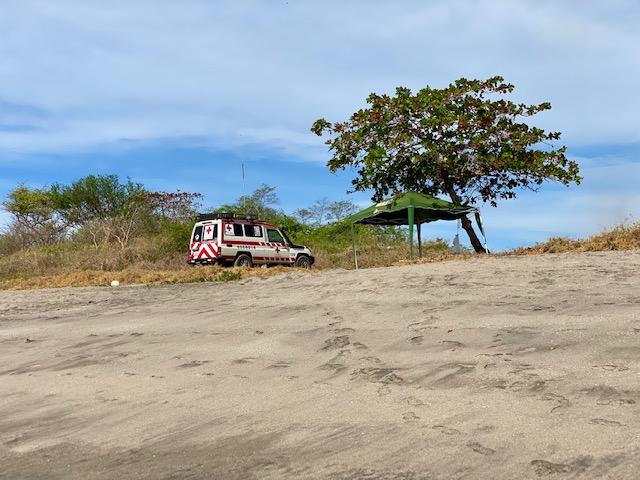
Also, further down the beach, we saw a truck, and a few people wearing lifeguard shirts on wave runners in the ocean. Some others were sitting on a tree branch near the truck. Had the US Embassy helped to pay for them, we wondered? Were we witnessing our tax dollars at work? We conjectured that they might have been stationed there during Easter weekend, one of the busiest tourist beach times. (For that reason, we had purposely avoided going to the beach during Holy Week). Or, maybe they were doing training? We certainly hoped they were not there for a rescue operation. We have been back to that beach many times since and have never again seen lifeguards there.
Mary also touted that they had worked to coordinate repatriation flights during COVID. We had received regular updates on this through the STEP emails we had signed up for. Speaking of STEP, this program was touted several times during the town hall. Everyone was encouraged to sign up. (So, why hadn’t they used it to promote this event?)
She also informed us that the embassy could be helpful for replacing lost or stolen passports. If there was a travel emergency, e.g., you were going to travel within 14 days, and you needed a replacement passport, they could generate one within an hour, but it would be limited. It takes two weeks to generate a full passport.
Mary admitted that, due to COVID, they had reduced in-person embassy appointments. If someone needed to conduct business at the Embassy, they were encouraged to reach out to schedule an appointment. It seemed that they were accepting appointments in June now (remember, this Town Hall took place in mid-March). Also, everyone was encouraged to consult the Costa Rican US embassy website for information.
There may have been more information given in the “official” presentation, but not a lot, and what was did not make an impression on us.
Following the official presentation, the first lady came back on and said they were going to answer some of the pre-submitted questions, and that if anyone else on the Zoom had a question, they were encouraged to use the chat box to enter them. This was a bit distracting, but also entertaining, as we could see the questions pop up while the speakers were speaking.
The Zoom “Recording” icon indicated that the presentation was being recorded. One person asked if there was going to be a link to the recorded meeting. You guessed it – the answer was “no.”
Multiple people asked about US visa applications. They were told that this topic wasn’t going to be covered and they should consult the website. The website address was provided. After the umpteenth question about it, and the same answer given, Mary did announce that she had gotten married here two years ago. Why was this information relevant? Did she marry a Tico? (Tico is the term Costa Ricans use to refer to themselves.) Did this help the people asking about visa applications?
A lot of people asked about federal benefits inquiries. Mary said that they were not going to address those, and once again, referred people to the website. We did learn that there is a different website for this, as it was given. But the questions kept coming. Finally, Mary asked if the person from the embassy who oversaw federal benefits here in Costa Rica could appear on Zoom. She did, and it was clear that she was at home and not expecting to be shown on Zoom. She was sitting at her dining room table with a hutch behind her – not the ubiquitous blue drapes and flags background.
More questions came in. There seemed to be a lot of frustration that not everything that was required to be done could be done over the website that we were repeatedly referred to and instead, required in-person visits. This was understandably challenging since in-person visits were being limited due to safety reasons. At this point someone asked, “Why isn’t it safe?” Then the same person immediately followed up with “The US embassy staff have always been behind bullet-proof glass. It has always been safe and secure!” I believe that there was an understanding gap about safety here – one relating to physical violence and the other relating to COVID safety protocols for people coming into the office. These statements were ignored and the gap was not bridged.
An inordinate number of people asked about dying in Costa Rica and what to do. (I assumed they were asking as the survivor, and not the deceased). This struck me as odd. Maybe enough old US citizens were retiring here and thought it was probable that they would die in Costa Rica rather than in the US. Or maybe there were more nefarious motives? Again, this question came up more times than I would have thought reasonable. Finally, Mary said the embassy would help with any necessary official paperwork and returning of the remains. Not sure if it required an in-person visit?
Toward the end of the Zoom meeting, many people sent comments that they appreciated this town hall. One person said that they had lived here in Costa Rica for 25 years, and this was the first one of these that they had heard about. The person didn’t mention if they were enrolled in the STEP program, but as noted previously, it wouldn’t have helped.
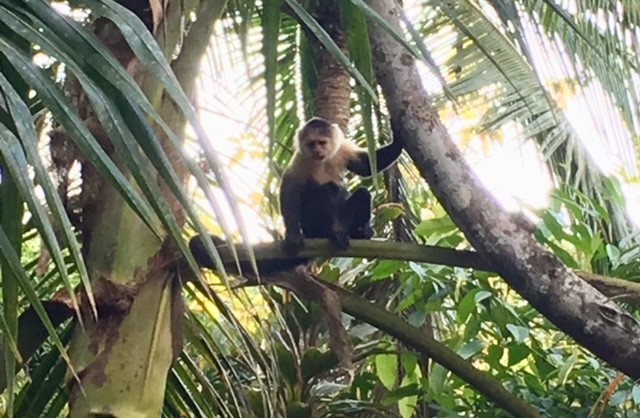
The final question submitted in the chat box was not addressed – “do spider monkeys have rabies?” I checked – this is not answered on the Costa Rica US Embassy website.
 Remember, it's an adventure.