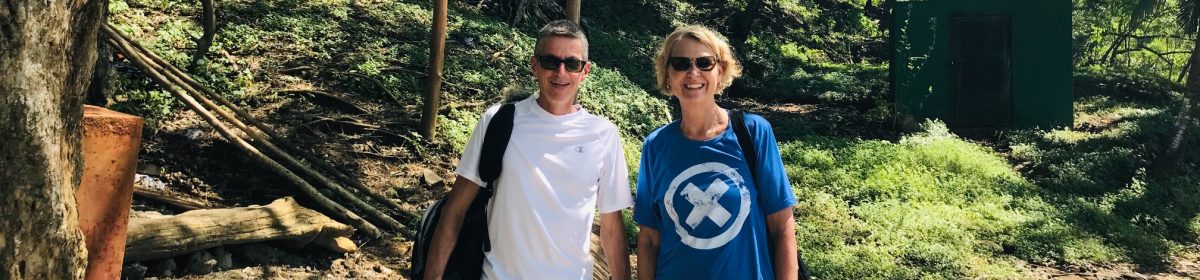
Now that we are somewhat settled, we wanted to start exploring our new country. September and October are the rainiest months of the rainy season here. With some research we found that the Caribbean side of Costa Rica is “drier” when the rest of the country is “rainier.” There are several options along the coast, but we decided to make our first trip at the end of September to Tortuguero. The name Tortuguero means “Place of Turtles.”
Tortuguero is located along the northern Caribbean coast of Costa Rica. It is somewhat remote and is not a place you go for a beach vacation. The beaches are dark sand beaches and are known for dangerous rip tides and sharks. Tortuguero is a place you go to see turtles and other amazing wildlife. September seemed like an ideal time because not only would it be drier and warmer there than Escazú, but it is one of the peak nesting months for Green Turtles.
This is the first post about our trip to Tortuguero – the journey, not the destination.

There are no direct roads into Tortuguero; you either must take a small plane (pricey option) or get there via boat. We booked our stay at Aninga Lodge for Thursday, September 26 through Saturday, September 28. The lodge had 3-day, two-night packages that included several tours and all meals. We also thought it would be a fun way to spend John’s birthday!
Aninga Lodge is one of several lodges owned by the same company in Tortuguero. The village of Tortuguero relies on tourism. To help get tourists to Tortuguero, the lodges arrange for transportation to and from the San José area (where we live). As we found out, that is a logistical feat that these lodges manage to carry out every single day.
When we booked our stay, we were told that we would be picked up around 6:00 a.m. on Thursday and we would get a confirmation of the time the day before. Wednesday afternoon rolled around and I started getting a little nervous since we hadn’t heard anything. Mid-afternoon I finally broke down and called the number on the confirmation email. Yes, they were going to pick us up around 6:10 a.m. Being on time is not exactly a thing here, so we were amazed when a shuttle pulled up in front of our Escazú Village apartment complex at just about exactly 6:10 a.m. Thursday morning.
The driver confirmed that we were going to Aninga Lodge and tagged our two bags.

Inside the shuttle was another couple who spoke Spanish. We climbed in the second row of the two rows of seats in the van. We drove around for a bit to another small hotel, where we picked up one more passenger, also a Spanish speaker. We then drove into central San José until we came to another hotel. A tour guide opened the van door and told us to board a larger bus that was parked there. He confirmed that we were going to Aninga Lodge, our luggage was stored in the baggage compartment of the bus, and off we went.
The large bus seated about 50 people, two seats on each side of the aisle. There was little leg room in the seats (worse than cheap seats in an airplane, believe it or not). The bus started its circuitous route through San José, stopping at different hotels and picking up more passengers at each stop. Most of the time we were navigating streets in the downtown area of San José. This was interesting since we hadn’t been to downtown San José before. At one point, I noticed that we were traveling down the exact same road as we had earlier. It turns out that the pre-arranged pickup point for one smaller shuttle had to be changed due to traffic conditions in San Jose, so we were forced to back-track.
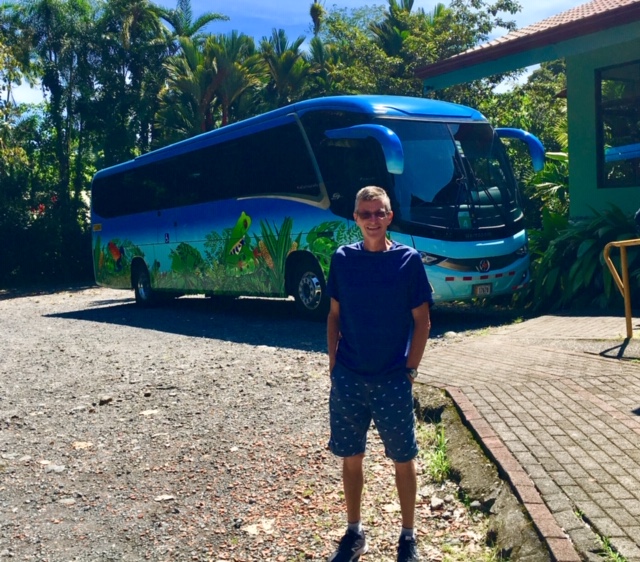
We could get a sense of the nationalities boarding the bus by what/how people spoke. There were some people from England that seemed to have a tour guide with them. There was a large group from Israel, and two people distinctly from the US, among others. A couple from the England group sat in front of us. At first they were two rows ahead. Then one of them moved to the seat row in front of us and reclined his seat. OK, that was kind of rude because there was no leg room, and now there was just no room. At this point John decided to move to another empty row so we would both have enough room to sit.
(You can tell a lot about people when you travel with them. These two confirmed that they were rude when it was time to get off the bus for breakfast. She was in the first row of passengers, and she just stood up and blocked the aisle to get her bag down and decided that she needed to change her shoes, in the aisle, blocking everyone else on the bus from exiting. Everyone politely waited and didn’t say anything, which only encourages this kind of behavior, as far as I am concerned.)
By 8:00 a.m., we had made all our stops and everyone was finally loaded on the bus. At that point I was grateful for two things. The first was that I had taken my medicine to prevent travel sickness, as the big bus had been rocking back and forth as it winded its way through San José. The second was that we had purposely not ingested a lot of liquids that morning. We were nearly two hours in and hadn’t left town.
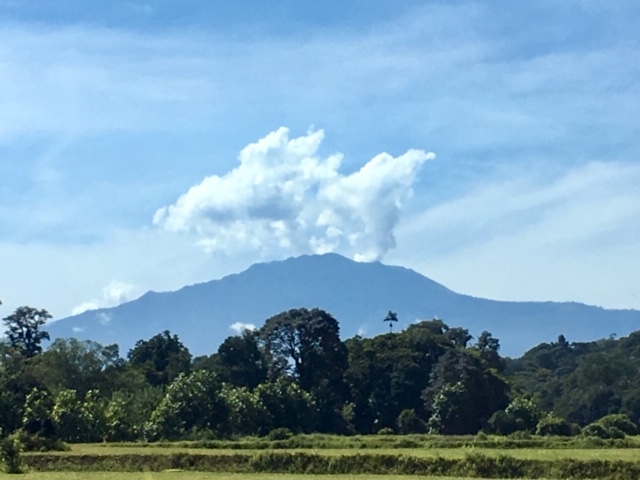
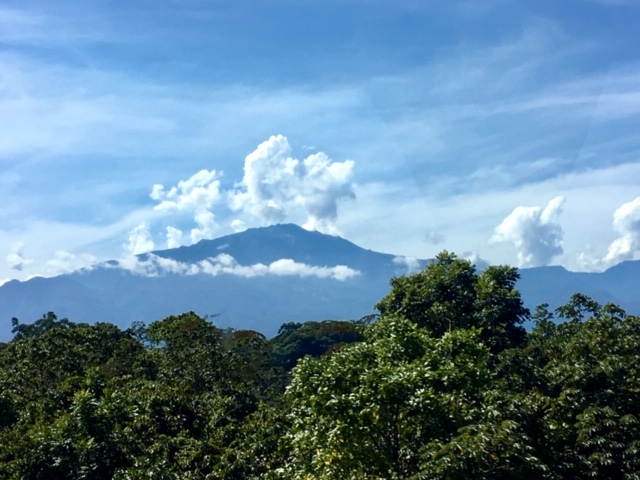
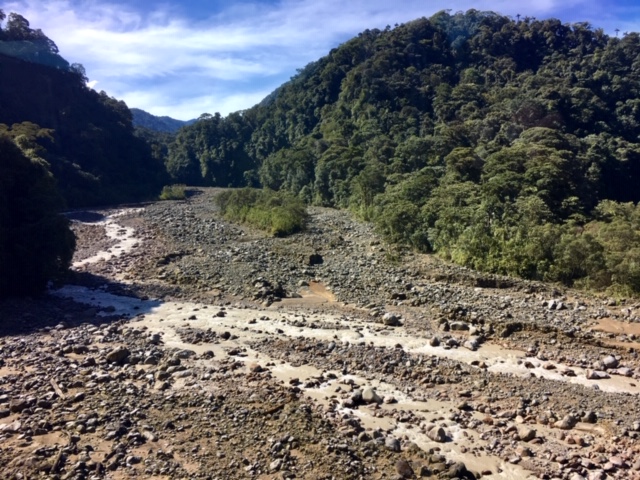
We headed out of San José on Highway 32 which is the main road to the Caribbean side of Costa Rica. Costa Rica is mountainous. San José is at 3500 feet elevation located in a central valley surrounded by mountains. We had to go up through the mountains via Highway 32, before we could descend to sea level. The upside to that (no pun intended) was that we traveled 15 km through the Braulio Carrillo National Park. The park is beautiful with tree-covered mountains. Mostly what we could see were steep hills on each side of the highway where the road had been cut through the mountains. Every once in a while, we would reach an open spot that would provide a breathtaking view. It is difficult to capture the expansive beauty of the park from a moving bus. At one point the main tour guide pointed out that we would be able to see an active volcano. We also passed a river that the guide told us carried material from the active volcanoes.
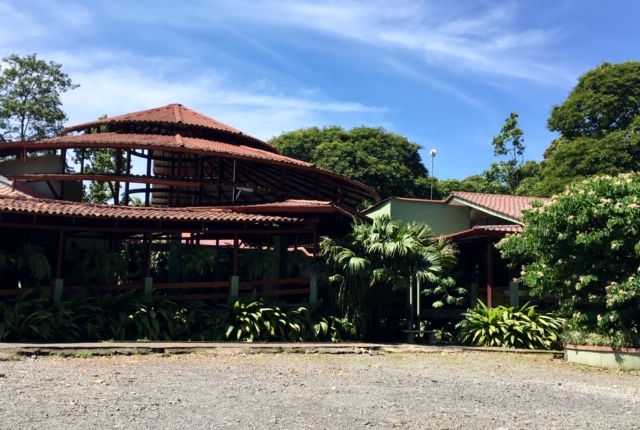
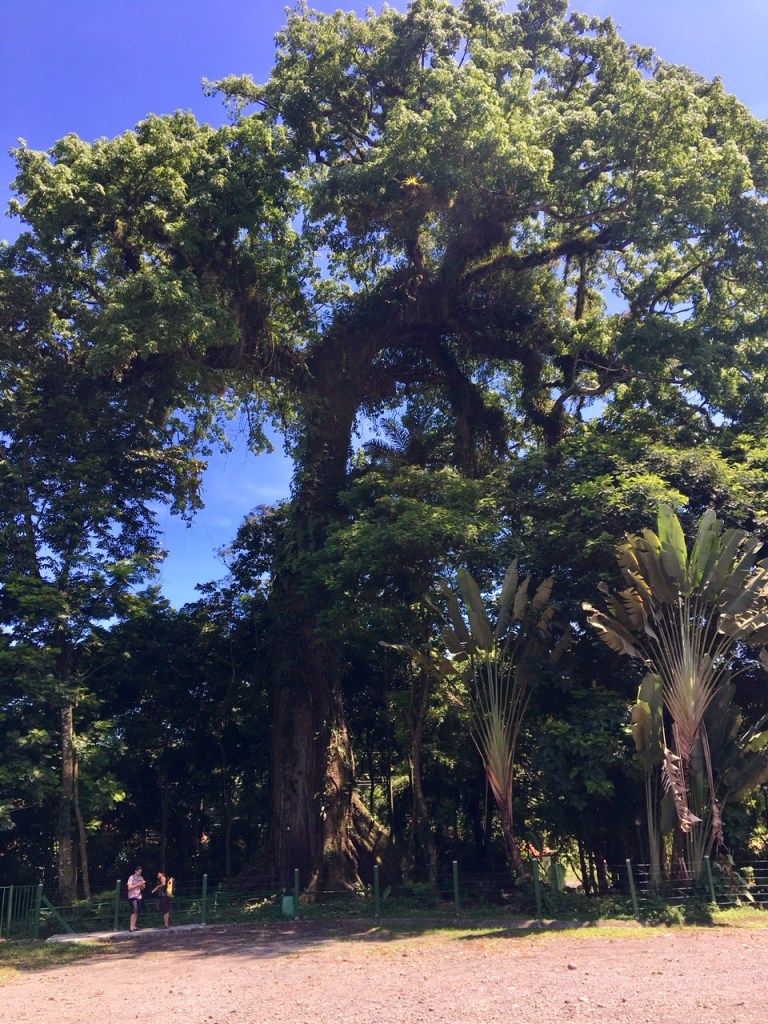
A little before 9 a.m. we had descended into the lowlands of the Caribbean side of Costa Rica and stopped for breakfast at the Ceiba restaurant near the town of Guápiles. The restaurant’s name comes from the large Ceiba (or Kapok) tree growing near the front of the restaurant.
In addition to the transportation to and from San José, our three-day, two-night package included all meals starting with breakfast on day 1 through lunch on day 3. As we were to learn, all meals were served buffet style and would include some variation of rice.
At breakfast we sat with the other two from the US that were on the bus. Deb and Eric were nice young people from Washington State who were in Costa Rice to celebrate Deb’s birthday. (I shudder to myself when I say things like “nice young people” as it just sounds like something an old person would say…) At any rate they were only staying one night and then moving on to Limón where they were meeting up with six other friends to stay at an Airbnb. We found that they were also staying at Aninga Lodge.
We were given about 40 minutes for breakfast, which was plenty of time, as the buffet line moved quickly. We even saw that they were selling rain ponchos in the small gift shop. I was tempted to purchase one, as we have been looking all over Escazú for rain ponchos, with no luck. It was only $5. I decided not to purchase the rain poncho, as we had approached the 40-minute mark. Well, they told us 40 minutes, but Costa Rica time kicked in here, and as John and I were standing by the bus ready to board, we watched as most everyone else rambled about with bananas in hand. (I am not sure why, but if bananas are provided in a buffet, most people think they need to pick one up and carry it around.)

Finally, we boarded the bus, with an additional four passengers we picked up at the restaurant. The bus passed by small towns, fields with cattle and bananas. The banana trees have covers over the bunches of bananas to help protect them and make them ripen faster.
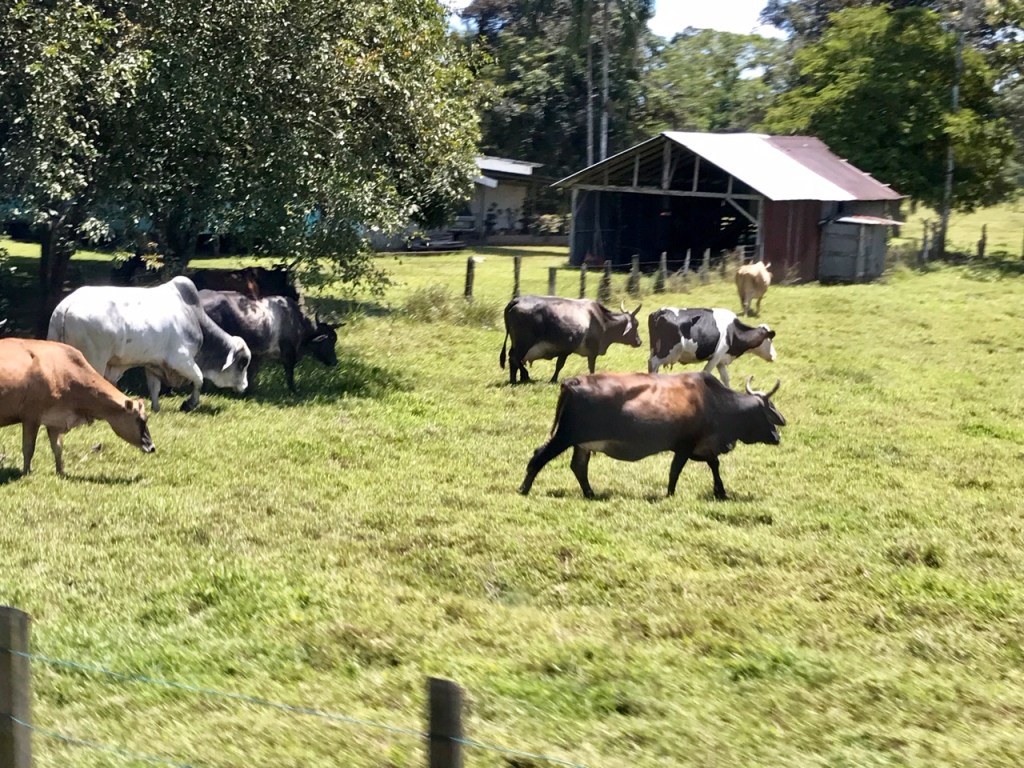
Cattle 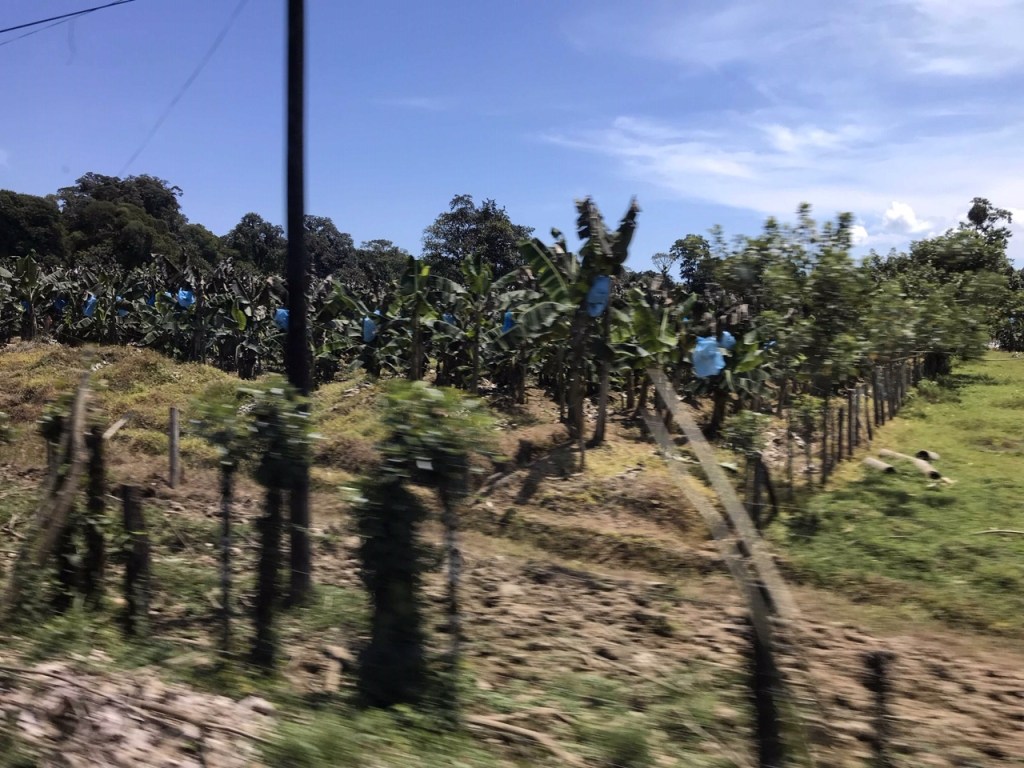
Banana plants with fruit covered in blue bags
At one point we turned down a small road and found ourselves at a sort of boat landing on the river. It had a restaurant structure on one side and a dirt-sand beach where there were several boats docked (if you can say docked when there is no dock). The main tour guide told us to wait to get off the bus until our specific lodge was called. When he called Aninga, we got off the bus along with the two from Washington State and the Spanish-speaking couple on our early morning shuttle. We collected our luggage from the bus and walked it down the dirt-sand-rock beach. At that point we met our Aninga tour guide, Bernardo. He instructed us to take our luggage to one of the boats that was only carrying luggage. He then said that the boat ride was going to take over an hour, we were out in the middle of nowhere, and that it was strongly suggested that we use the bathrooms before we departed.
You never have to tell me twice to use the bathroom, so John and I went to the restaurant area that also housed the bathrooms. There we found a short line of people waiting to approach a woman sitting at a desk with a cash box and a sign that read “Baños 1 mil colones”. When we reached the front of the line, the woman asked, “Uno or dos,” and held one then two fingers. At first John didn’t say anything. He later admitted to me that in his original interpretation, he had found her question to be quite personal and wondered why it would make a difference. Did they charge differently depending on what took place in the baño? Finally it dawned on him that the woman had noticed we were together and she was asking if he was going to pay for one or two people. “Dos” was the appropriate answer.
We returned to the beach and were instructed to get on another boat that was only carrying people. Our guide held back the couple from Washington State for a brief conversation. As we later found out, he was questioning why they wouldn’t be staying for the entire 3 days and 2 nights like everyone else.
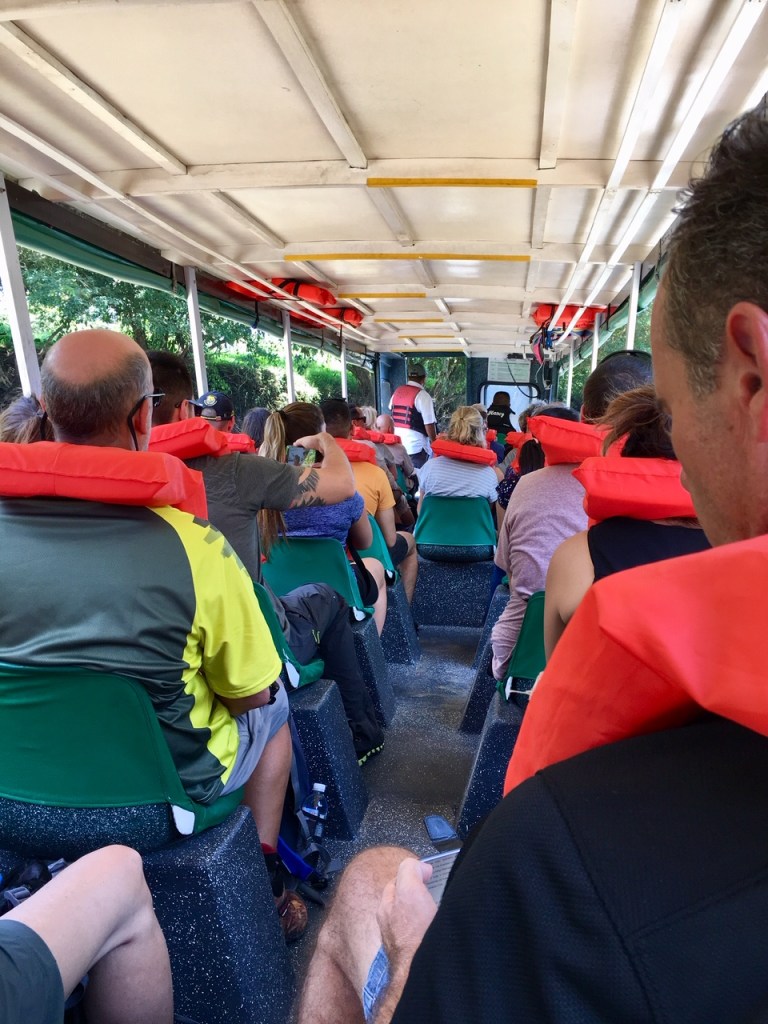
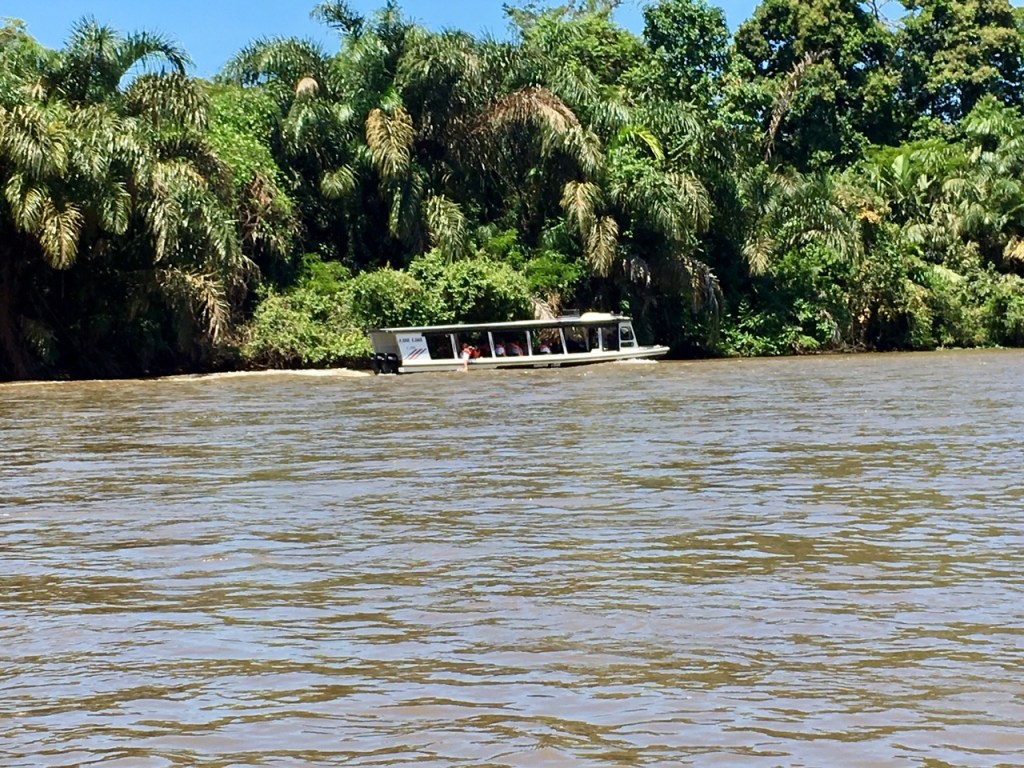
The boats sat low in the water, and kind of reminded me of the old Disney Jungle ride at Disney World.
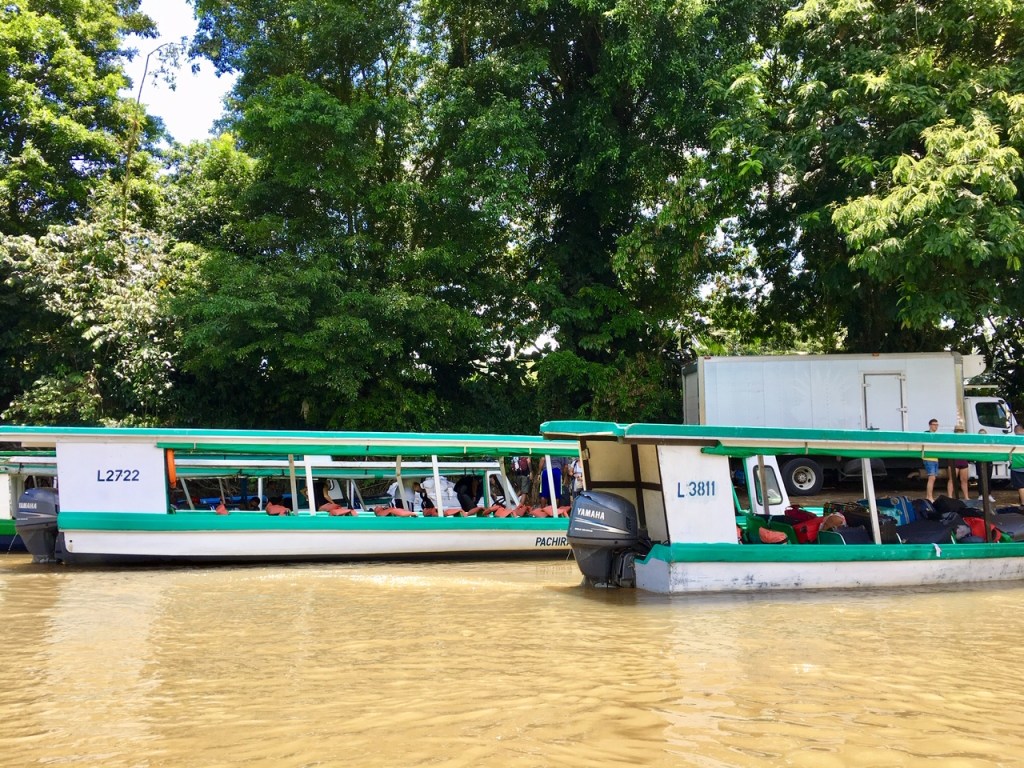
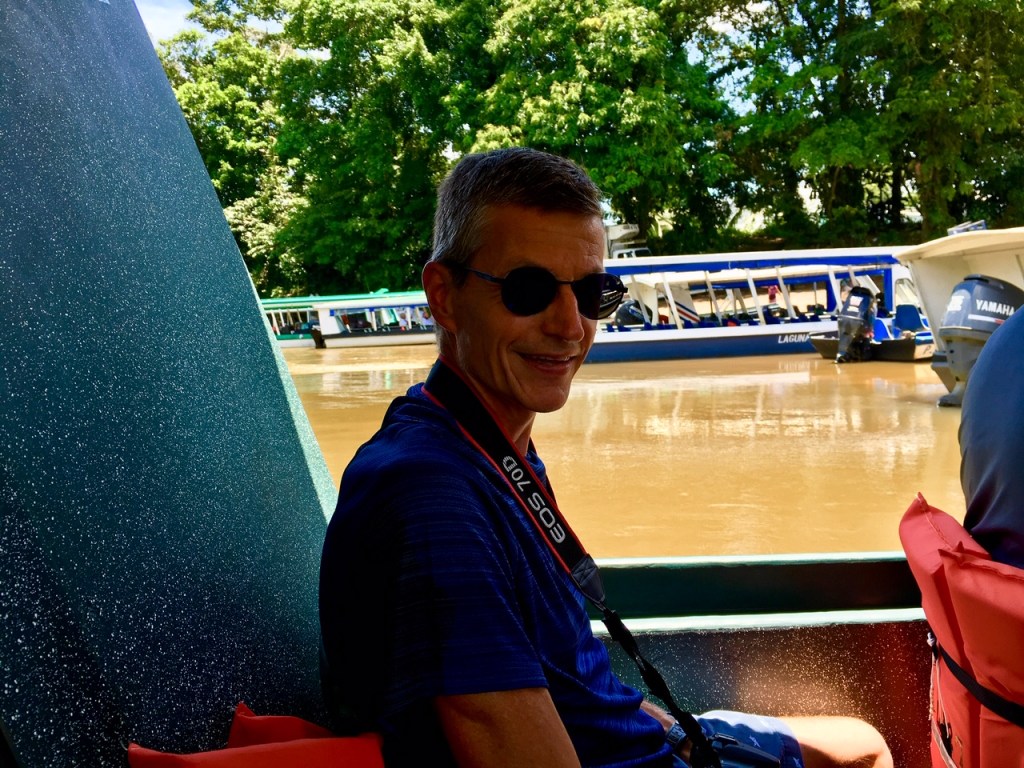
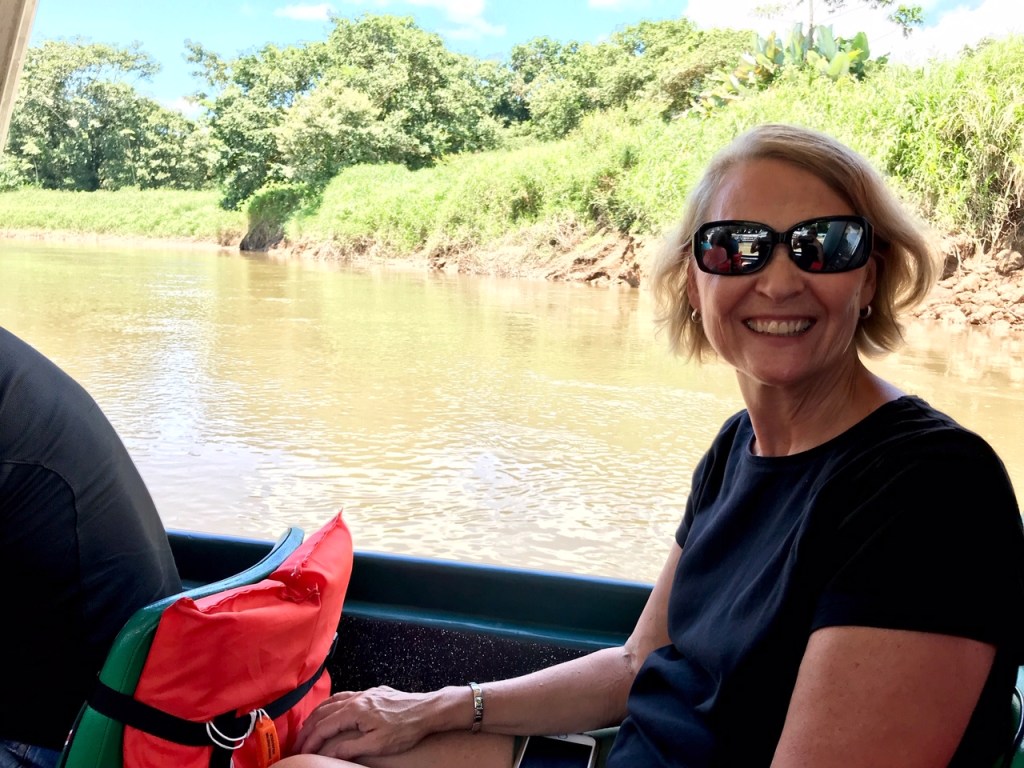
There were very few seats left on the boat, so John and I went all the way to the back. When the rest of our Aninga group was boarded, the main tour guide gave us our boat instructions. Everyone in Costa Rica is required by law to wear life vests. The boat would not move until everyone was wearing one. The second boat instruction was, “keep your cameras ready” and the third instruction was, “you value your hands, so keep them inside the boat.”
Off we went on the boat ride. It was a beautiful sunny day, and the boat ride was quite pleasant, well, except for the annoying German-speaking contingent seated in front of us. They also seemed to have their own guide who was seated directly in front of me. He spent most of the ride talking to the woman seated across from him, about her tattoos. He also liked to randomly say something loudly and point to one side of the boat just to make the other passengers turn their cameras and look excitedly. Then he would laugh and say something to the woman that clearly sounded like he was making fun of them. I was very happy that guy and his group were not staying at our lodge!
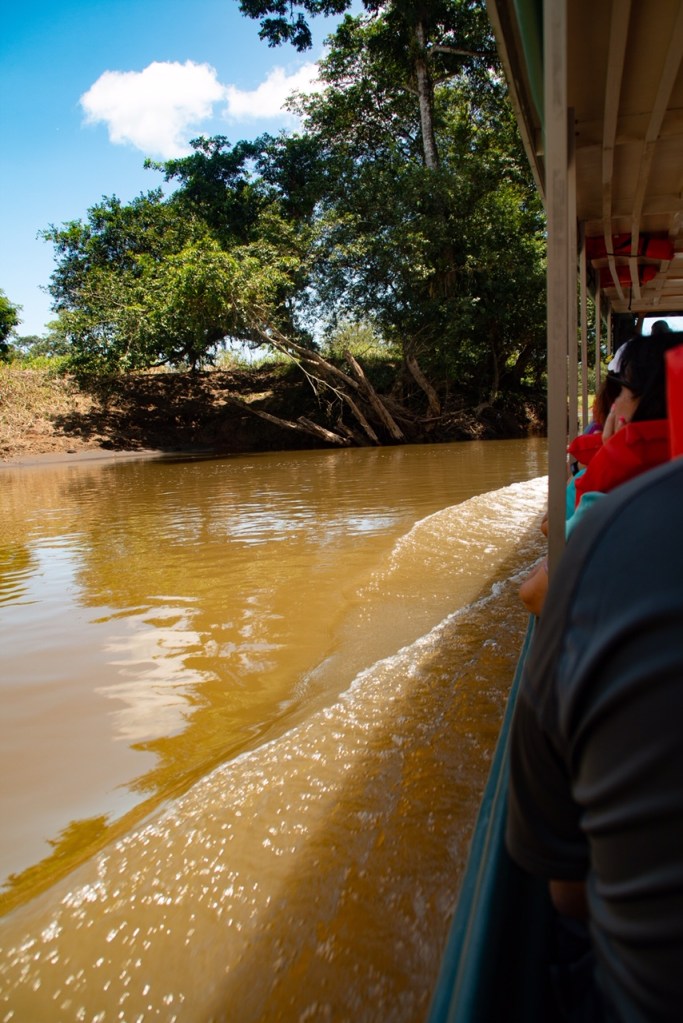
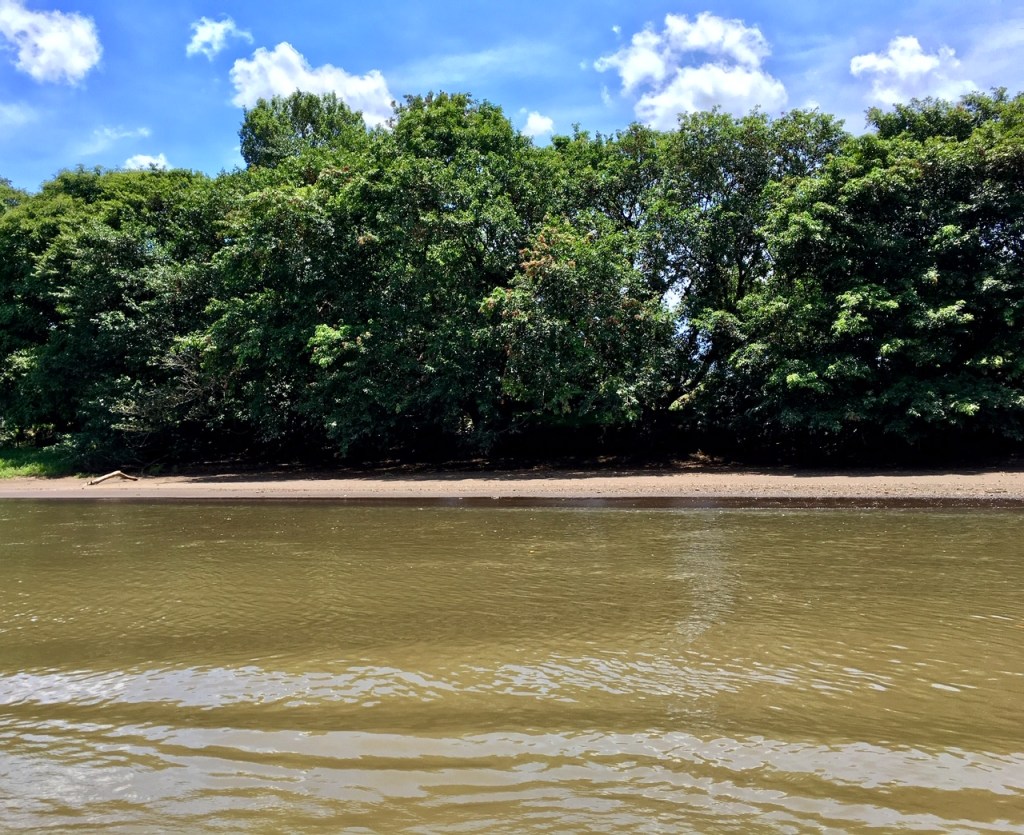
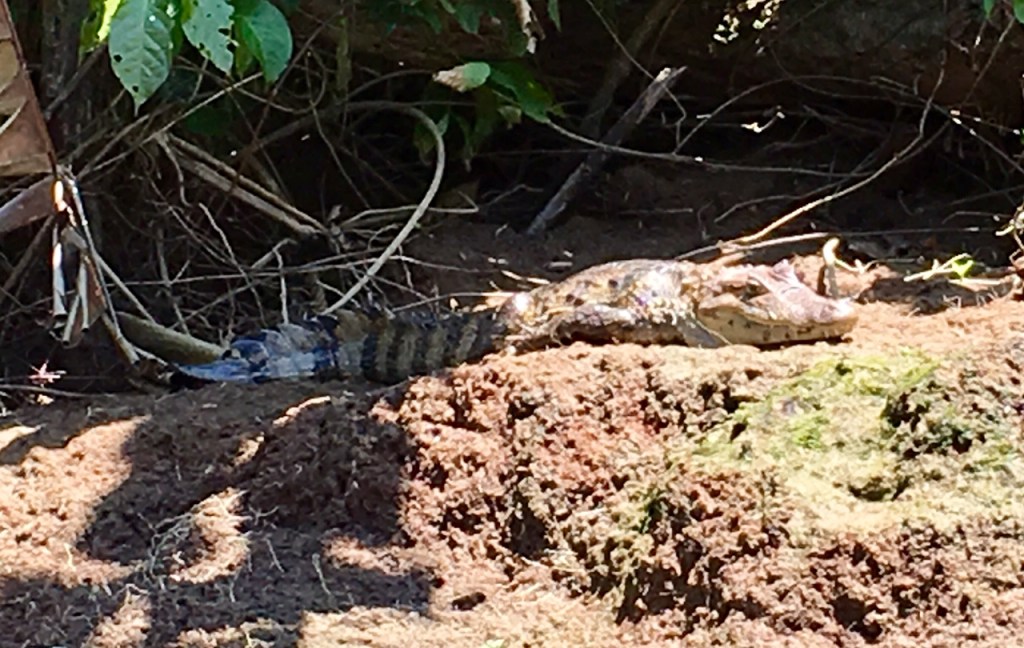
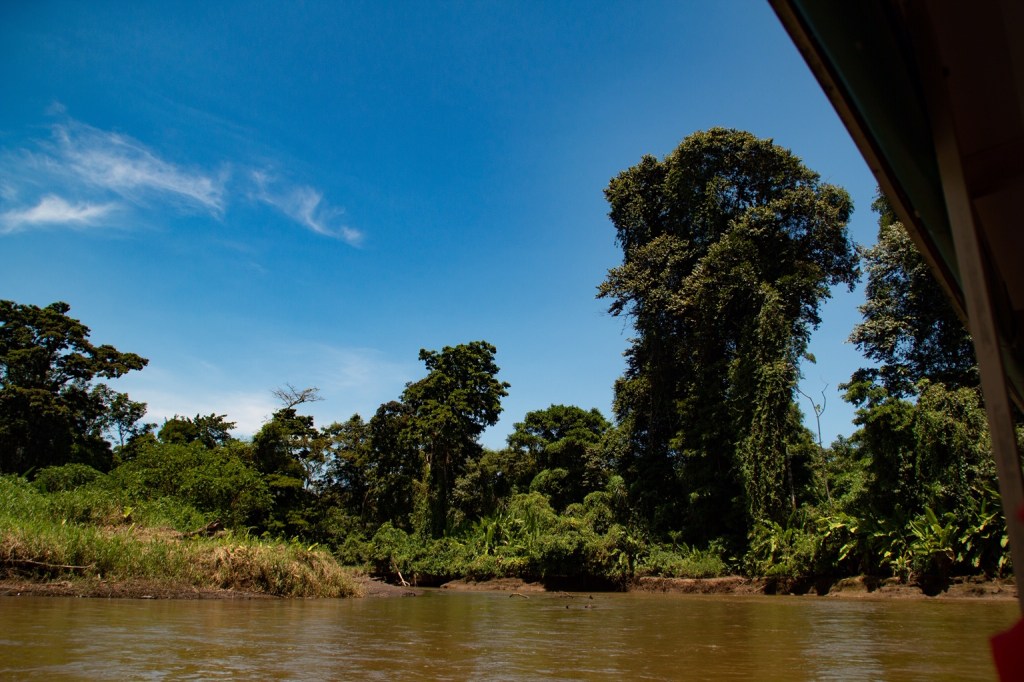
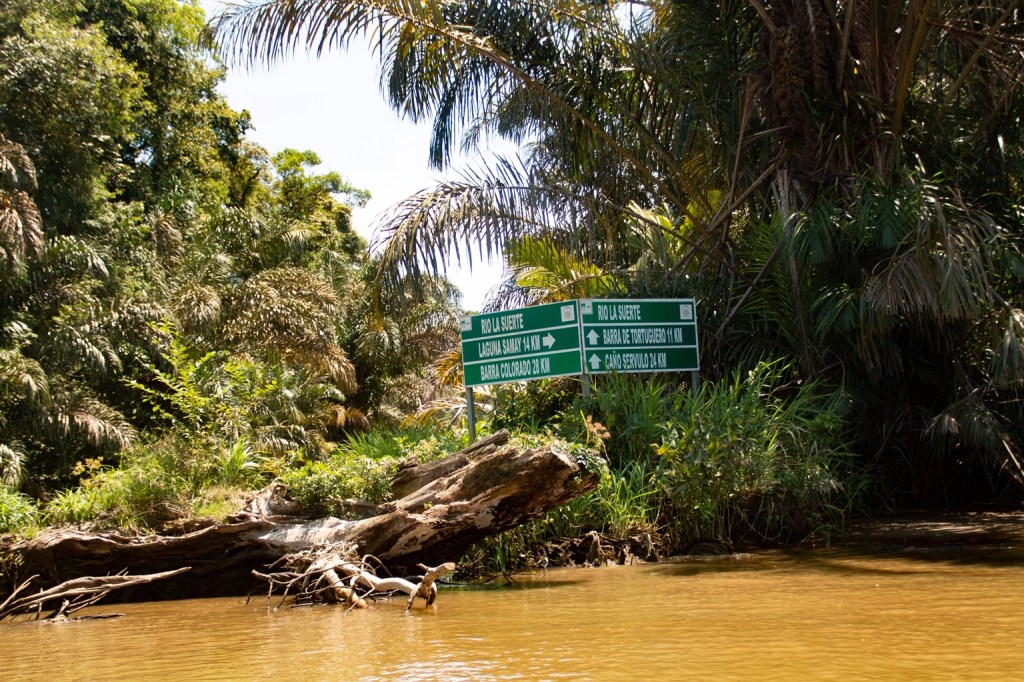
Still, despite the German’s best intentions to stir up interest over nothing, there were a few things to see along the way. The scenery was pleasing. We saw our first caiman sunning himself along the banks of the river! There was an actual “road” sign at a juncture in the river. (If you went left for 4 hours, you would end up in Nicaragua.) As we neared the town of Tortuguero, we stopped at the docks of a couple of different lodges to let the appropriate groups off. Our lodge was the last stop.

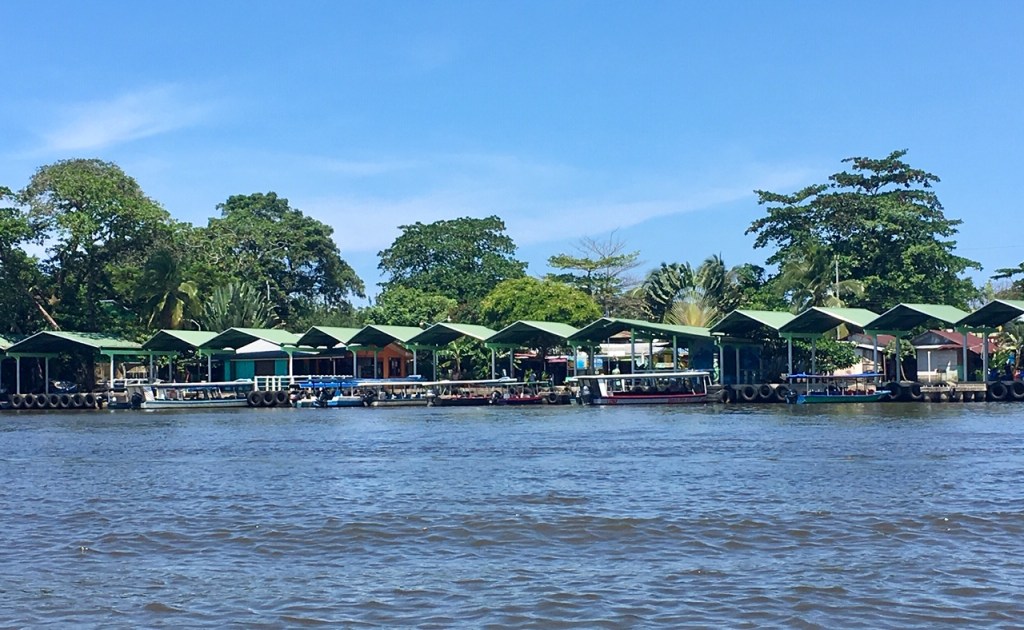
We were greeted at the dock of Aninga Lodge with glasses of tasty ginger drinks. (With the addition of vodka those drinks would have made a great Moscow Mule, which we found out later they don’t make at the bar). We were reunited with our luggage – that was a relief! The hotel receptionist then gave us our room (more like individual cabins) assignments and told us the rules, including times for breakfast, lunch and dinner; times the pool was open; times the bar was open (bar was near the pool); and most importantly, don’t throw toilet paper down the toilet, use the waste can in the bathroom that would be cleaned out every day. (Just like in Greece.)
We headed off to our individual cabins with our luggage.


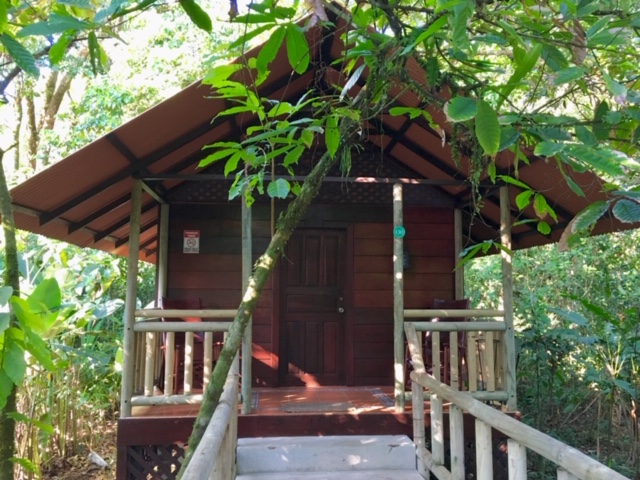
Here we were in Tortuguero, ready for our next activities, right after the buffet lunch, with rice! (More posts to come …)
 Remember, it's an adventure.